
DTF Printing and DTF
Transfers for
Custom Apparel
Create vibrant, durable custom t-shirts, hoodies, and apparel with DTF transfer printing built for flexible fabrics, bold designs, and print-on-demand fulfillment.
- Custom DTF transfer printing
- Works on a wide range of fabrics
- Great for bold, colorful apparel designs
- No inventory required
- Built for print-on-demand fulfillment
What Is DTF Transfer Printing?
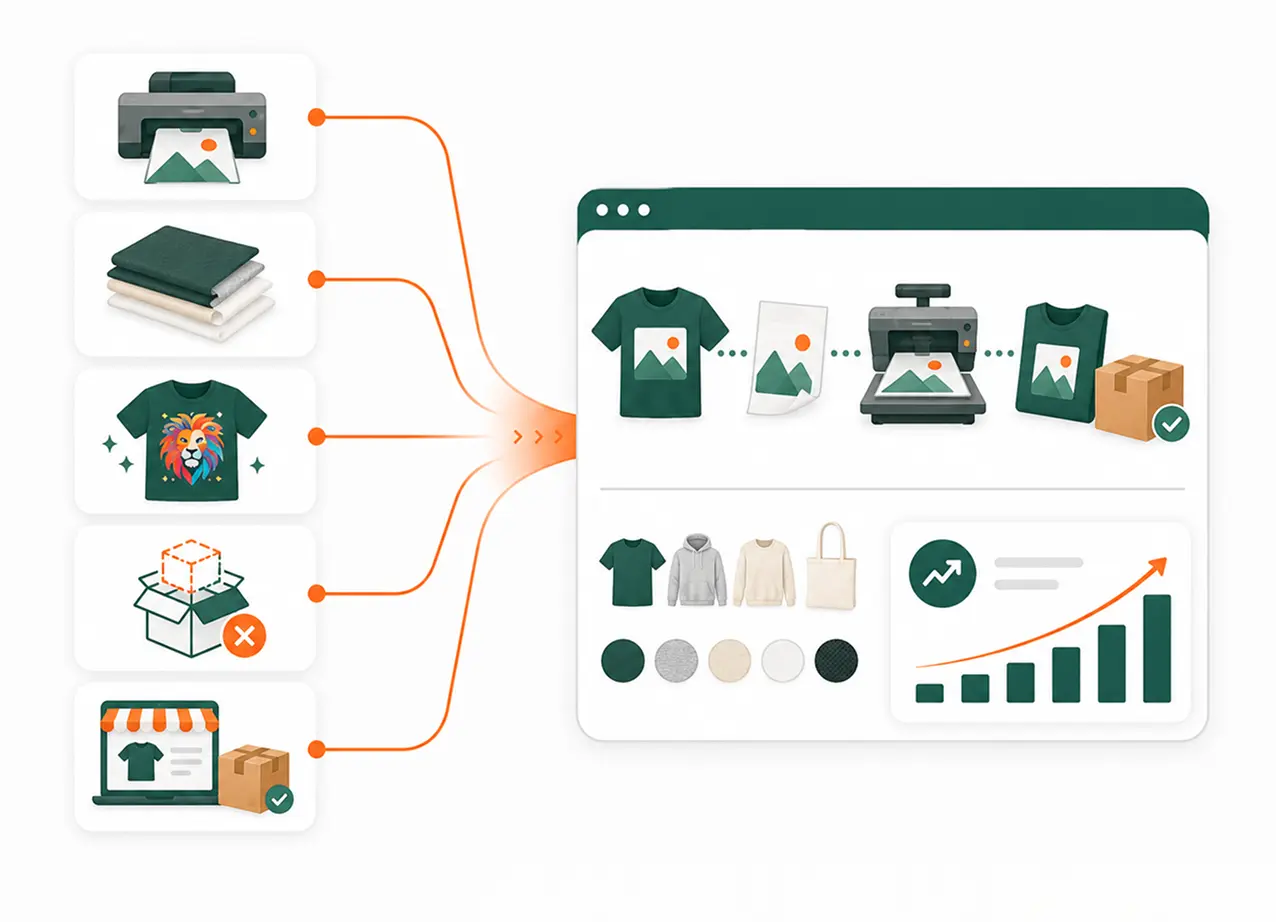
DTF transfer printing, also called direct-to-film printing, is an apparel printing method where a design is first printed onto a special transfer film. The printed design is then applied to a shirt, hoodie, or garment using heat and pressure.
In simple terms, DTF means direct to film. Instead of printing directly onto the shirt, the artwork is printed onto a film first. That printed film becomes the DTF transfer, which is then heat-pressed onto the garment.
This makes DTF printing a flexible option for custom apparel, especially when sellers need colorful designs, sharp details, and compatibility with different fabric types.
Quick Meaning
DTF transfer means a design printed onto transfer film that is ready to be heat-pressed onto apparel.
DTF Printing vs DTF Transfer:
What Is the Difference?
Many people use DTF printing and DTF transfer together, but they are not exactly the same.
DTF Printing
DTF printing is the full printing process. It includes printing the artwork onto film, adding adhesive powder, curing the print, and preparing it for heat application.
DTF Transfer
A DTF transfer is the finished printed film design. It is the ready-to-press design that gets applied to a garment with a heat press.
So, when someone searches “DTF transfer”, they are often looking for the finished transfer product. When someone searches “DTF printing”, they may be researching the method, service, or production process.
For SEO, Pengine should target both because apparel sellers may search using either phrase.
Why DTF Transfers Are
Popular for Custom Apparel
DTF transfers are popular because they are flexible, colorful, and suitable for many apparel use cases. Unlike some print methods that work best on only specific fabrics, DTF transfers can be used across cotton, polyester, blends, and other garment types.
DTF transfers are useful for:
- Custom t-shirts
- Sweatshirts
- Fitness apparel
- School and club apparel
- Small-batch clothing drops
- Hoodies
- Streetwear apparel
- Event merchandise
- Creator merch
- Print-on-demand products
For print-on-demand sellers, this flexibility is valuable because it allows more product variety without requiring large inventory commitments.
DTF Transfer Printing Services for POD Brands
Pengine’s DTF printing service is designed for sellers who want to create and fulfill custom apparel without managing production manually.
Instead of ordering inventory upfront, you can upload designs, create products, connect your store, and let orders move into fulfillment automatically.
With Pengine, you can:
- Create custom DTF printed apparel
- Launch t-shirts, hoodies, and sweatshirts
- Upload designs in bulk
- Generate realistic mockups
- Sync products with your store
- Fulfill orders on demand
- Reduce manual order handling
- Avoid holding unsold inventory
This makes DTF transfer printing a strong fit for Shopify merchants, apparel brands, streetwear sellers, and creator merch stores.
The DTF Transfer Printing
Process
The DTF transfer process is simple for sellers, but it requires the right production workflow behind the scenes.
Upload your design
Upload your artwork and place it on the selected product.
Create the product
Choose the apparel item, colors, sizes, and product details.
Generate mockups
Create product mockups that help shoppers understand how the final item will look.
Sync with your store
Publish the product to your ecommerce store and keep the order flow connected.
Customer places an order
When a customer purchases the product, the order is sent into fulfillment.
DTF transfer printing begins
The design is printed onto transfer film, prepared with adhesive, and cured for application.
Heat press application
The DTF transfer is applied to the garment using heat and pressure.
Quality check and shipping
The finished product is checked, packed, and shipped to the customer.
What are DTF transfer
sheets?
DTF transfer sheets are printed film sheets that contain one or more designs ready to be heat-pressed onto garments.
A DTF transfer sheet can be used for:
- One design
- Multiple small designs
- Logo placements
- Gang sheets
- Custom apparel batches
- Sample testing
- Product drops
In a print-on-demand workflow, sellers usually do not need to manage DTF transfer sheets themselves. Pengine handles the production side so the seller can focus on products, marketing, and growth.
What are DTF transfer gang Sheets?
DTF transfer gang sheets are larger transfer sheets that include multiple designs on the same sheet. This can be useful when printing several small logos, chest prints, sleeve graphics, or design variations together.
DTF gang sheets are useful for:
- Multiple logo placements
- Small apparel graphics
- Brand labels
- Sleeve prints
- Event designs
- Small-batch apparel runs
- Testing several designs together
For sellers, gang sheets can help organize multiple design assets more efficiently during production.
DTF transfer ready to
press
A ready-to-press DTF transfer means the printed transfer is already prepared and can be applied to a garment with a heat press.
In a traditional DTF transfer workflow, a seller may buy ready-to-press transfers and apply them manually. But for print-on-demand fulfillment, Pengine can handle the full workflow: product setup, printing, pressing, fulfillment, and shipping.
Ready-to-press DTF transfers are commonly used by:
- Small apparel shops
- Home-based clothing businesses
- Local print shops
- Custom merch sellers
- Event merch sellers
- Clothing brands testing new designs
Pengine’s model removes the need for sellers to manually press each order themselves.
DTF transfer designs
DTF transfer designs can include bold graphics, colorful artwork, logos, text, illustrations, and brand visuals.
DTF transfer printing works well for:
- Bold typography
- Colorful graphics
- Brand logos
- Streetwear artwork
- Fitness graphics
- Event artwork
- School and club designs
- Creator merch designs
- Small detailed elements
- Multi-color prints
DTF is especially useful when sellers want strong color output and design flexibility across multiple garment types.
DTF Transfer Temperature and Time
DTF transfer temperature and time depend on the material, transfer type, garment fabric, equipment, and production setup.
For SEO, this topic is important because many people search for DTF transfer temperature and time when they are manually pressing transfers.
For Pengine’s page, we should answer it carefully without turning the page into a technical heat press instruction manual.
GENERAL GUIDANCE
DTF transfers usually require heat, pressure, and a controlled press time to bond the design properly to the garment. The exact settings should always follow the transfer supplier’s instructions and garment requirements.
For Pengine sellers, this technical production work is handled as part of the fulfillment process.
DTF Transfer Instructions
If you are applying DTF transfers manually, you normally need to follow the transfer supplier’s instructions for temperature, pressure, press time, peel method, and final press.
But if you use Pengine for print-on-demand fulfillment, you do not need to manage DTF transfer instructions for every order. Pengine handles the printing and fulfillment workflow behind the scenes.
The seller’s workflow is simpler:
- Upload the design
- Create the product
- Publish to store
- Receive orders
- Let fulfillment handle production
- Track and grow the business
This is the advantage of using DTF printing inside a POD fulfillment system instead of managing production manually.
DTF vs DTG Printing
DTF and DTG are both popular apparel printing methods, but they work differently.
DTF Printing
DTF prints the design onto film first, then transfers it to the garment with heat and pressure.
DTG Printing
DTG prints the design directly onto the fabric of the garment.
DTF vs DTG: Main difference
Print method
Printed on film, then transferred
Printed directly onto garment
Fabric flexibility
Works on more fabric types
Best on cotton-rich garments
Print feel
Slightly more noticeable layer
Softer, more natural feel
Best use case
Bold graphics, mixed fabrics, versatile apparel
Detailed cotton t-shirts and soft-feel prints
POD value
Great for product variety
Great for cotton t-shirts and detailed artwork
DTF vs screen printing
DTF and screen printing are both used for custom apparel, but they are useful for different business models.
DTF Printing
DTF is flexible for small orders, design variety, and print-on-demand fulfillment.
Screen Printing
Screen printing is often better for bulk orders with simple designs and fewer colors.
DTF vs screen printing: Main difference
Best for
Small batches, POD, colorful designs
Bulk orders, simple designs
Setup
Easier for varied designs
Requires screens and setup
Color flexibility
Strong for multi-color artwork
More efficient with limited colors
Order quantity
Works well for low volume
Better for high volume
Product testing
Good for testing designs
Less flexible for testing
For new apparel brands and POD sellers, DTF is often more practical because it supports design variety without requiring large production runs.
DTF vs Screen Printing
Quality
DTF transfer printing can deliver vibrant, detailed designs, while screen printing can deliver strong, consistent prints for bulk orders.
Use DTF when:
- You need full-color designs
- You want to test multiple designs
- You sell print-on-demand apparel
- You need small-batch flexibility
- Your design has gradients or complex artwork
- You want to avoid large inventory commitments
Use screen printing when:
- You need a large bulk order
- The design uses fewer colors
- You want strong solid-color prints
- The same design will be printed many times
For Pengine’s business model, DTF is valuable because it supports flexible apparel fulfillment without forcing sellers into traditional bulk production.
DTF Printing vs Embroidery
DTF printing and embroidery are different decoration methods.
DTF applies a printed transfer to the garment. Embroidery uses stitched thread.
DTF is better for:
- Graphic t-shirts
- Hoodies
- Full-color artwork
- Streetwear graphics
- Event merch
- Design-heavy apparel
- Print-on-demand products
Embroidery is better for:
- Logos
- Hats
- Polos
- Uniforms
- Premium brand marks
- Corporate apparel
DTF is usually better for colorful graphic apparel. Embroidery is better when the goal is a stitched, premium logo finish.
DTF vs DTG vs Screen Printing
There is no single best print method for every apparel product. The right method depends on the fabric, design, quantity, and business model.
DTF Printing
Mixed fabrics, bold graphics, POD products, small batches
Sellers who want the softest cotton print feel
DTG Printing
Cotton t-shirts, detailed artwork, soft-feel prints
Some synthetic fabrics
Screen Printing
Bulk orders and simple designs
One-off orders and many design variations
For a new print-on-demand business, DTF is a strong method because it gives you product flexibility without requiring upfront inventory.
Custom DTF Transfers with No Minimum
Pengine supports custom DTF printing for sellers who want to launch apparel without committing to bulk orders.
This is useful when you want to test designs, launch a limited drop, or sell niche apparel products without buying stock in advance.
No-minimum DTF printing is useful for:
- New apparel brands
- Shopify POD stores
- Creator merch
- Event merchandise
- Streetwear drops
- Fitness apparel
- School and club apparel
- Seasonal campaigns
- Small-batch product testing
Instead of printing hundreds of units before knowing demand, you can sell first and fulfill after each order is placed.
Best Products for
DTF Printing
DTF transfer printing is suitable for a wide range of apparel products.
Best DTF products include:
- T-shirts
- Hoodies
- Sweatshirts
- Long sleeve shirts
- Youth apparel
- Fitness apparel
- Event merch
- Streetwear products
- Cotton and blended garments
We’re here to make it the advantage.
Why Choose Pengine for DTF Printing?
Pengine is built for sellers who need more than a print method. It helps simplify the full print-on-demand workflow from product creation to fulfillment.
Pengine helps you:
- Create DTF printed products
- Upload designs in bulk
- Generate product mockups
- Sync products with your store
- Fulfill orders automatically
- Reduce manual production work
- Avoid inventory risk
- Support apparel growth with a cleaner workflow
For growing apparel brands, the real value is not just DTF transfer printing. It is having a fulfillment system that helps your business run with less manual work.
Who Should Use DTF Transfer Printing?
DTF transfer printing is a strong fit for sellers who need flexibility, color, and product variety.
DTF is ideal for:
- Shopify merchants
- Apparel brands
- Streetwear sellers
- Creator merch stores
- Fitness brands
- School and club merch
- Event merch sellers
- Artists and illustrators
- Print-on-demand entrepreneurs
Frequently Asked
Questions

A DTF transfer is a printed film design that is applied to apparel using heat and pressure. DTF stands for direct to film.
Start Selling DTF Printed Apparel
with Pengine
Launch custom t-shirts, hoodies, sweatshirts, and apparel products without holding inventory or managing production manually.
Create your products, connect your store, and let Pengine handle the DTF printing and fulfillment workflow behind the scenes.