Black Friday Print-on-Demand Fulfillment: How to Prepare for Delays, Reprints, and Order Surges
Your Black Friday campaign is working. Orders are arriving faster than usual. Then a popular hoodie size becomes unavailable, a customer asks to change their address, and several shipments stop showing tracking updates.
Each issue needs a different response. Handling them becomes much easier when you decide what to do before the sale begins.
For print-on-demand sellers, Black Friday preparation means checking more than discounts and product pages. You need to know how orders reach production, where delays can happen, and who takes responsibility when something goes wrong.
In 2026, Black Friday falls on November 27, followed by Cyber Monday on November 30. Use those dates to organize your campaign, while confirming production and delivery estimates separately with your fulfillment partner. Shopify’s retail calendar
Here’s how to build a fulfillment plan that supports the extra sales.
Start with the delivery promise on your product page
Customers want to know when their order will arrive. Your fulfillment partner may quote how long it takes to produce it. Those are different timelines.
A useful planning model is:
Estimated arrival = order processing + production + carrier handoff + transit, with allowance for uncertainty.
Ask your fulfillment partner what its estimate includes. Does the production window start when the customer pays, when the order syncs, or when the artwork is approved? Are weekends and holidays excluded? Do different products follow different schedules?
Then check the wording across your product pages, shipping information, checkout, and confirmation emails.
“Ships within” describes dispatch. “Arrives within” describes delivery. Keep that distinction clear, and explain when a mixed-product order may arrive in separate packages.
Faster shipping also needs careful wording. A quicker carrier service only shortens the transit stage unless expedited production is included too.
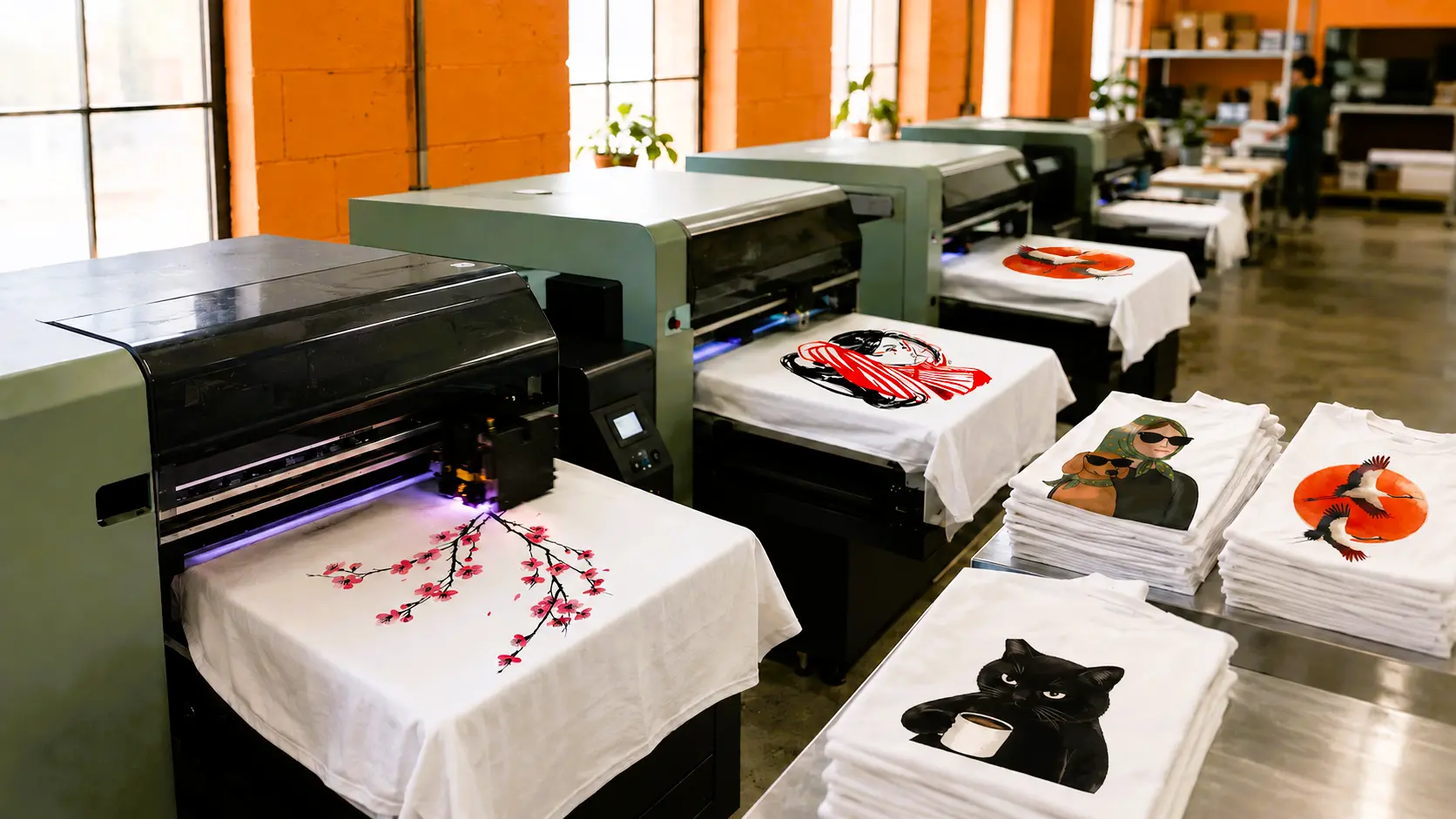
For a walkthrough of the order journey, see our guide to print-on-demand T-shirt fulfillment.
Prepare the products you plan to promote
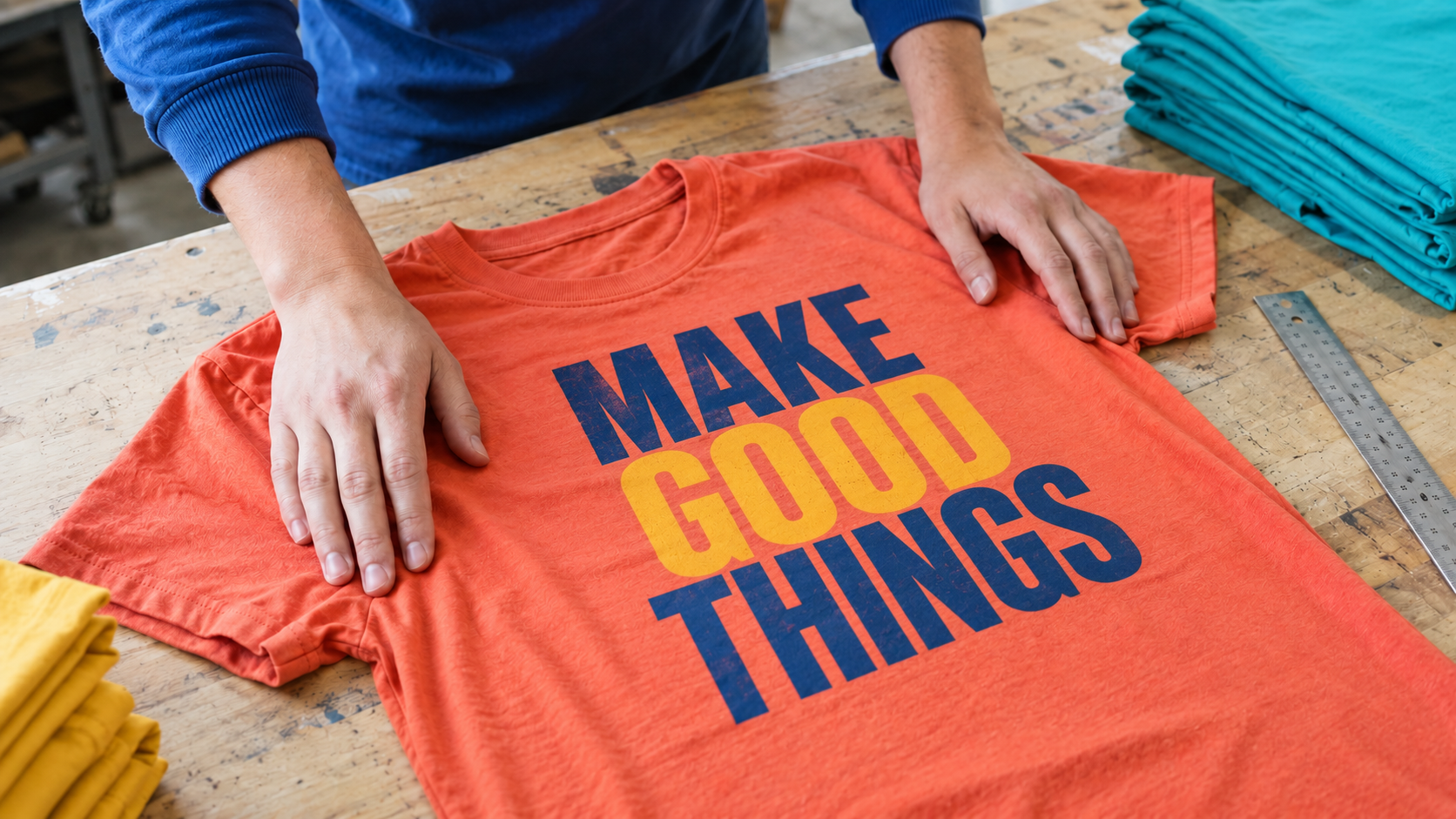
Check the exact garment, print placement, and sizing before promoting a product.
Build your Black Friday collection around products you have checked closely.
Order samples of your main promotional items. Inspect print placement, color, garment fit, and the finished result after washing according to the care instructions. Check the specific blank, color, and print method you intend to sell.
Review every promoted variant. A product can be available overall while a particular size or color is unavailable.
Agree on alternatives in advance, including what happens if a blank runs out. A different garment can change the fit, fabric, color, and customer experience. Get the customer’s agreement before substituting an item.
Use this planning checklist, adjusting the timing to your sample lead times and campaign schedule:
| When | What to check |
|---|---|
| Several weeks before launch | Samples, artwork, size charts, product availability, and possible alternatives |
| Before announcing the offer | Production estimates, destination coverage, shipping costs, and discount margins |
| Before increasing promotion | A complete test order, product mapping, billing, tracking updates, and customer notifications |
| During the sale | Orders needing action, changing product availability, spending capacity, and support workload |
| After the sale | Undelivered orders, open reprints, refunds, and the actual cost of the campaign |
These are preparation stages, not shipping deadlines.
Forecast the surge in units, not just orders
Your fulfillment partner needs more detail than “we expect a busy weekend.”
Share the products you will promote, the dates your emails and ads will run, and a reasonable range of expected demand. Include the likely split across sizes and colors.
Build a normal-volume scenario and a higher-volume scenario. For example, if your store usually receives 30 orders a day, you might test whether your operation could handle 120 a day during a four-day promotion.
At an average of 1.2 items per order, that higher-volume scenario means 576 items to produce. This is an illustrative stress test, not a sales prediction.
Ask what would happen at that volume:
- Could the promoted variants remain available?
- Would production estimates change?
- Who would flag a problem and contact your team?
- Could you answer the additional customer questions?
- Would your payment method have enough available funds?
If fulfillment charges arrive before your store payouts, calculate the funding gap. A profitable campaign can still stall when there is not enough money available to pay for production.
Decide when you would reduce advertising or pause a product. Tie that decision to conditions such as unresolved orders exceeding your team’s capacity or a production estimate moving beyond what your store promises.
Keep one list of orders that need action
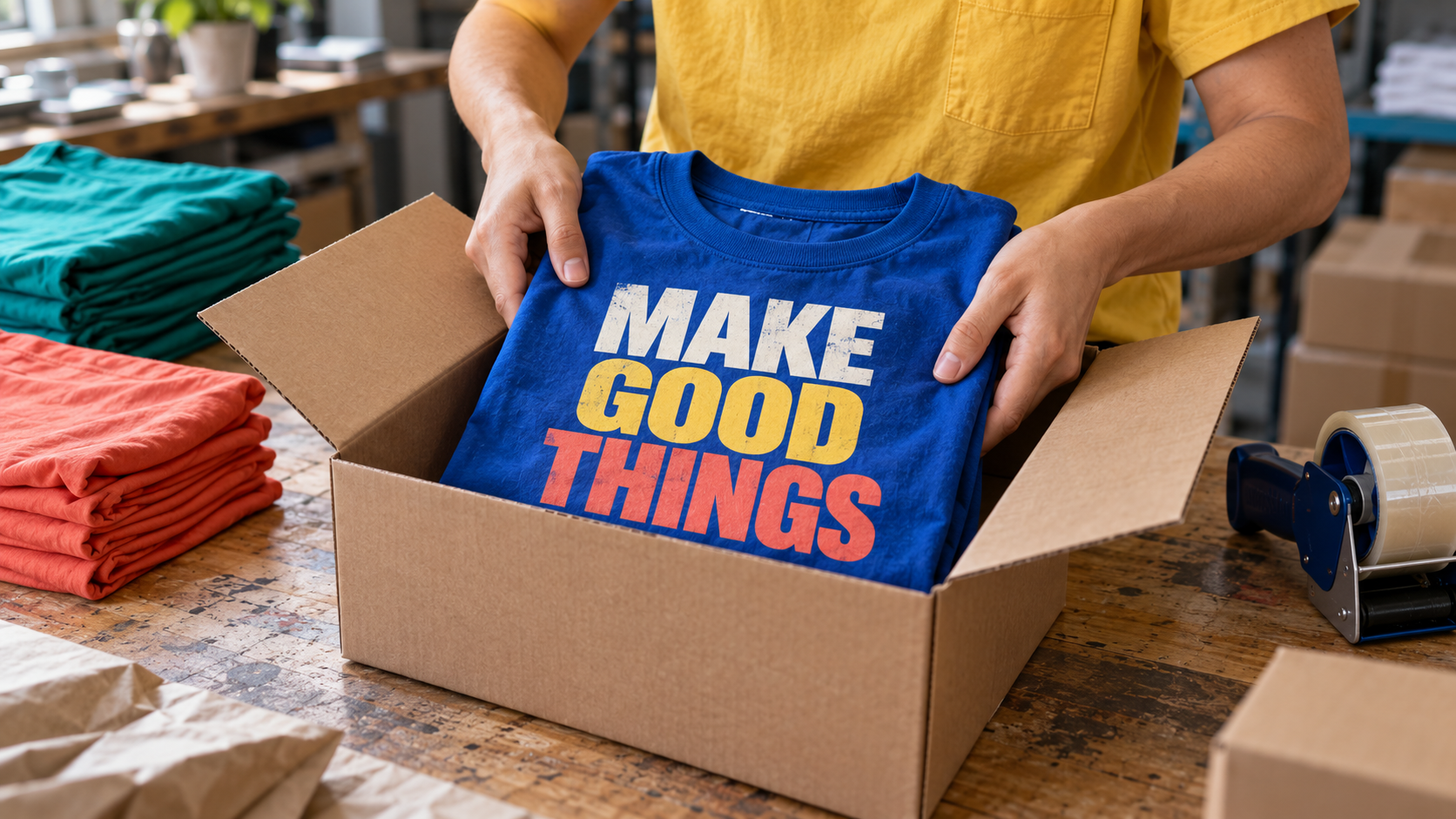
Keep orders moving through packing and dispatch, with a clear next action for anything that needs attention.
During the sale, create a shared list of exceptions: orders that require someone to investigate, correct, or approve something.
Record the order number, issue, current status, person responsible, next action, and next customer-update time. For a solo seller, this can be a simple spreadsheet.
Different problems need different responses:
| What you see | What to do next |
|---|---|
| A paid order is missing from the fulfillment platform | Check the connection, product mapping, and payment status before submitting it again |
| An order has passed its expected production window | Ask the production partner for its status and a revised estimate |
| A shipping label exists without a carrier acceptance update | Ask the fulfillment partner to confirm the handoff |
| A package is delayed in transit | Review the carrier’s latest information and investigation process |
| A customer reports damage, the wrong item, or a print defect | Collect the relevant order details and evidence, then assess the available resolution |
A tracking number alone does not establish that a parcel has entered the carrier’s network. For example, USPS explains that “Shipping Label Created, USPS Awaiting Item” means a label exists but USPS has not yet received the package. USPS tracking guidance
Take care when correcting orders that have already entered fulfillment. Shopify notes that changing an order back to unfulfilled does not stop a fulfillment service from processing it. Confirm cancellation with the provider before sending the same order elsewhere. Shopify fulfillment guidance
Agree on the reprint process before you need it
A print defect, shipping damage, incorrect item, and customer choosing the wrong size may have different remedies. Confirm your partner’s terms for each situation before the campaign.
Find out what evidence is required, how long you have to report an issue, who approves a replacement, and whether production and replacement shipping are covered.
When a problem arrives:
- Gather the essentials. Record the order number, affected item, issue, and relevant photos.
- Check the cause. Compare the delivered item with the order and approved artwork.
- Confirm the resolution. Establish whether a reprint, refund, or another option is appropriate.
- Track it through completion. Record the replacement order and follow it until the issue is resolved.
Before reprinting, check whether the original file or product setup needs correction. Reusing an incorrect file can reproduce the same problem.
Also consider the customer’s reason for buying. A replacement that arrives after an event may no longer be useful. Explain the available options and confirmed timing before proceeding.
Leave room in your discount for problems
A discount reduces the money available to absorb a replacement, refund, or shipping adjustment.
Consider a hypothetical T-shirt that normally sells for $30. A 20% discount reduces the selling price to $24.
| Item | Illustrative amount |
|---|---|
| Revenue after discount | $24.00 |
| Product and printing | −$12.00 |
| Shipping paid by the seller | −$5.00 |
| Payment fees | −$1.00 |
| Advertising cost per order | −$4.00 |
| Amount remaining | $2.00 |
These are rounded assumptions, not Pengine prices. The example excludes tax and fixed business costs.
If an uncovered replacement costs another $17 to produce and ship, it exceeds the $2 contribution from that order.
You can also model a reserve. Assuming 3% of orders require a seller-funded $17 replacement, the expected allowance is $0.51 per order, leaving $1.49 before fixed costs and tax. That 3% is an example, not an industry benchmark.
Use your own costs and issue history when setting the offer. Test what remains after discounts, shipping, fees, advertising, and the problems you may need to fund.
Write customer updates before the inbox gets busy
A useful update explains what you know, what you are doing, and when the customer will hear from you again.
Avoid promising a revised arrival date until you have information that supports it. You can still commit to a follow-up time.
Adapt these templates to the actual order status and actions you have taken.
Production delay
Hi [Name], your order [number] is taking longer to produce than the estimate we originally shared. We’re checking its status with our production partner and will update you by [date and time], even if we’re still waiting for a confirmed dispatch date. I’m sorry for the delay. If you need the order for a specific occasion, please reply so we can discuss the available options.
Tracking has not progressed
Hi [Name], the tracking for order [number] hasn’t updated as expected. We’re checking the shipment status with [fulfillment partner/carrier]. We don’t yet have a confirmed revised delivery date. We’ll contact you again by [date and time] with the latest information and next steps.
Replacement approved
Hi [Name], we’ve approved a replacement for the [item] in order [number]. The current production estimate is [confirmed estimate], with shipping time additional. We’ll send the tracking details when they’re available. I’m sorry the original item wasn’t right, and we’ll follow the replacement through to delivery.
Choose follow-up times your team can meet. Keep each commitment visible in the same list you use to track unresolved orders.
Put a named person behind the plan
Before launching, make sure someone is responsible for checking production exceptions, contacting the fulfillment partner, updating customers, and approving resolutions.
That may all be one person. What matters is that every issue has an owner and a next action.
After the campaign, review which products caused problems, where delays began, how many replacements were needed, and how much profit remained after those costs. Use those findings to improve the next promotion.
If you’re preparing a Shopify store for the holiday rush, talk to Pengine about your product mix, expected order volume, and fulfillment workflow. Bring your campaign plan so you can confirm the details that matter before the orders arrive.
Images are AI-generated and do not depict Pengine employees or facilities.

Switch to Pengine.
We offer a fully managed migration service at no extra cost, including product transfer and setup support.