What Is Print on Demand? How It Works, Costs, and Whether It Is Worth It
Print on demand (POD) is a fulfillment model where a product is printed, packed, and shipped only after a customer orders it. You create the design and sell it through an online store; a fulfillment partner handles production and delivery, so you hold no inventory and do not pay for stock upfront. This guide explains how print on demand works, what it costs, what you can sell, and whether the business model is profitable.
Print on Demand Explained: The Short Version
- Print on demand means made-to-order. Nothing is printed until a customer places an order, so there is no inventory and no upfront stock cost.
- You handle the design and the storefront; a fulfillment partner prints, packs, and ships each item, usually under your own branding.
- Startup cost is close to zero — no minimum orders, no warehouse — which makes it the standard way to test designs and launch a brand.
- Margins are thinner per item than bulk production, because you pay a flat per-item price, so pricing discipline matters more than volume.
- It suits apparel and accessories with many designs or unpredictable demand; it is the wrong fit for a single design selling in the thousands, where bulk printing is cheaper.
| Print on demand at a glance | |
|---|---|
| What it is | Products printed and shipped only after a customer orders |
| Who makes it | A print-on-demand / fulfillment partner, under your branding |
| Inventory | None; nothing is made until it sells |
| Upfront cost | Effectively zero; no minimums |
| You provide | The design and the online store |
| Cost per item | A flat per-piece price (around $9–$16 for a printed tee) |
| Best for | Testing designs, large catalogs, creators and growing brands |
| Not ideal for | One design in huge volume, or ultra-low price points |
What is print on demand?
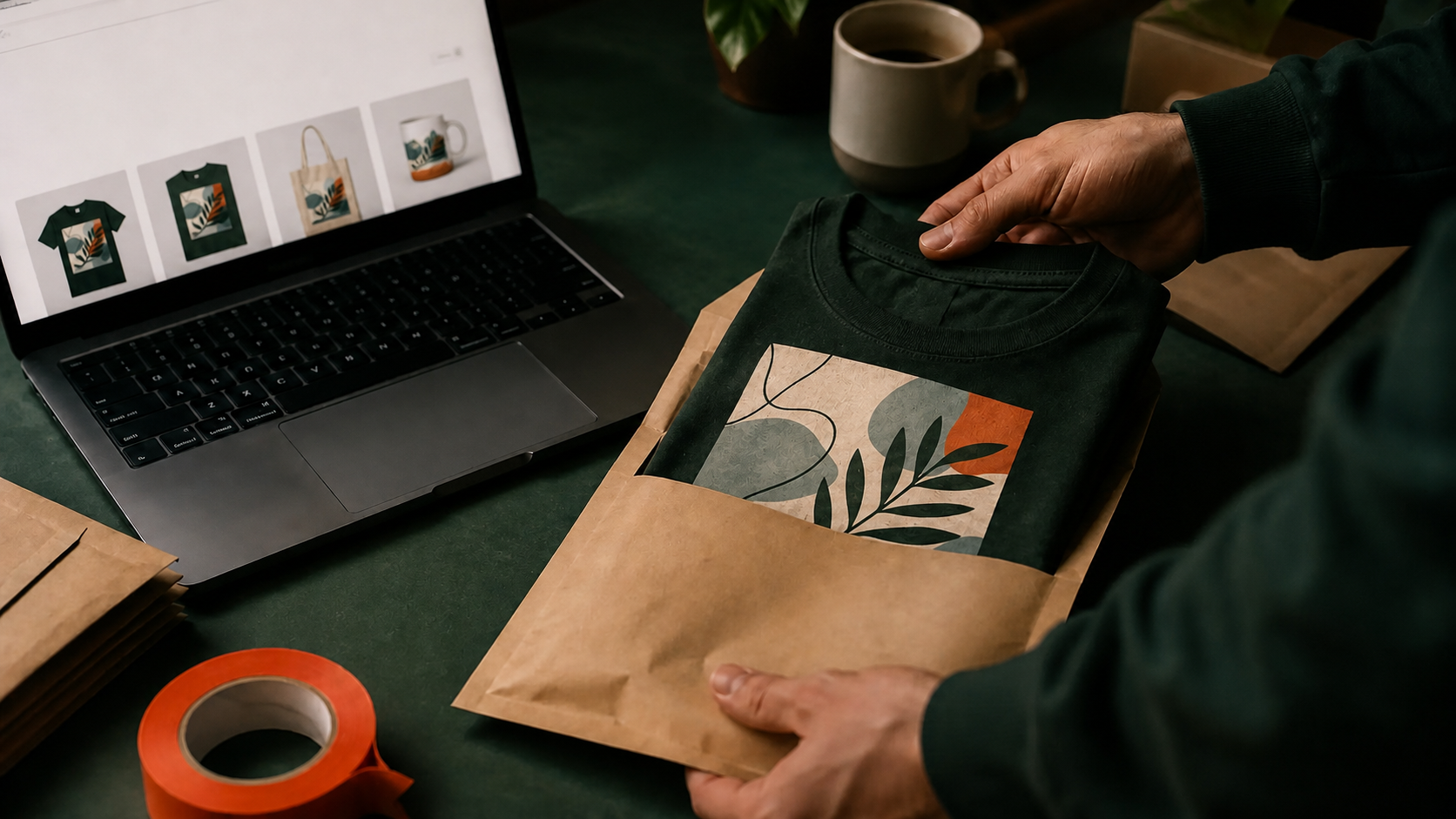
Print on demand is a production and fulfillment model in which each item is manufactured individually, after it is ordered, rather than produced in bulk and stored. You upload a design, list the product in your store, and nothing physically exists until a customer clicks buy. At that point the order is sent to a fulfillment partner who prints your design onto a blank product, packs it, and ships it — usually with your branding on the label and packing slip, so the customer only ever sees your brand.
The contrast with traditional retail is the whole point. A conventional apparel brand orders, say, 500 shirts up front, ties up cash in inventory, stores it, and hopes it sells. With print on demand that risk disappears: you carry no stock, pay for nothing until a sale happens, and can list a hundred designs as easily as one. What you trade away is the per-unit discount of bulk manufacturing — but for most people starting out, removing the inventory gamble is worth far more than a volume discount they could not afford to unlock anyway.
How Does Print on Demand Work? Five Steps from Order to Delivery
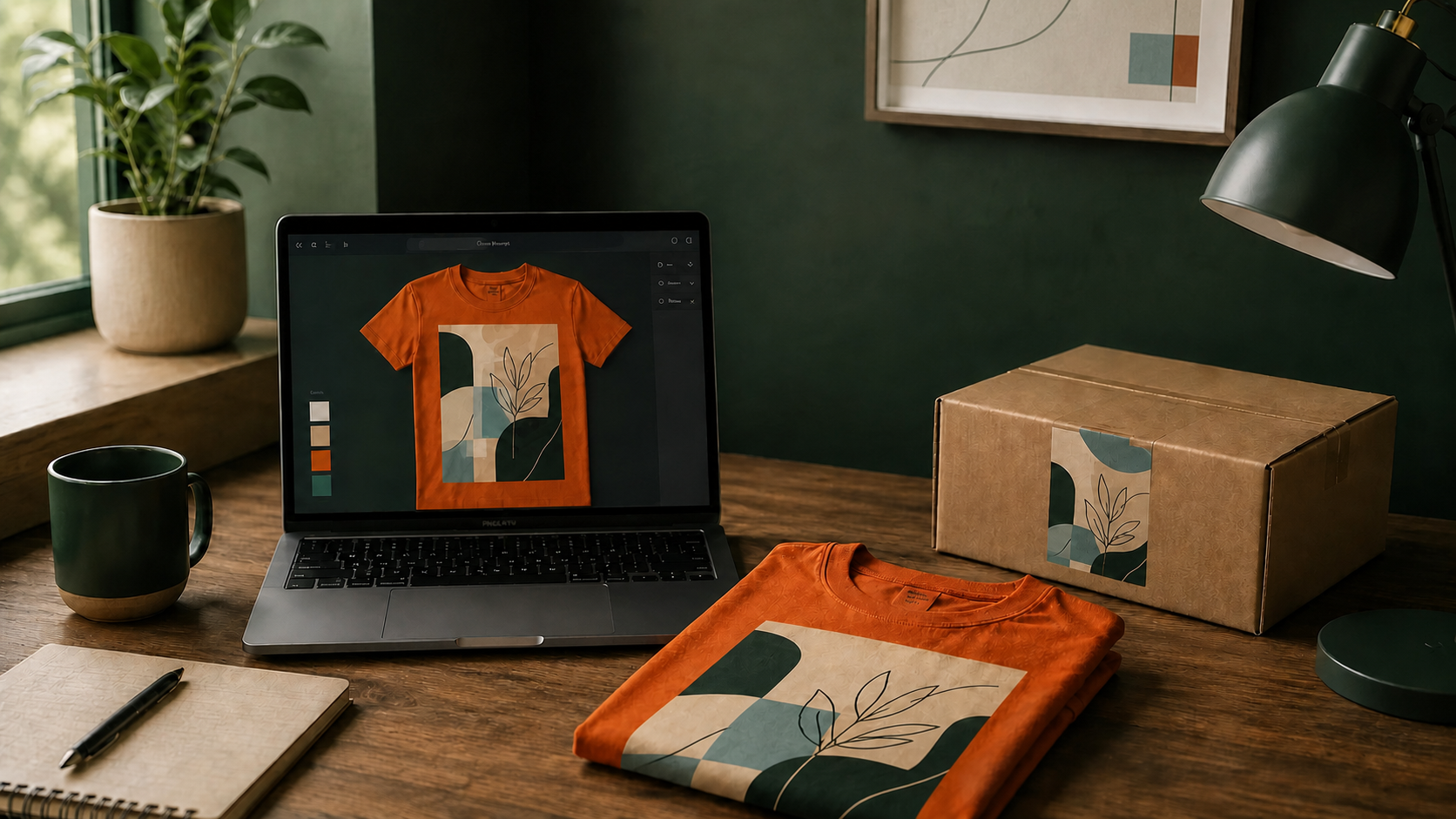
The flow from idea to delivered package has five steps, and once it is set up most of it runs without you touching it.
- You create a design and place it on a product — a t-shirt, hoodie, mug, tote, and so on.
- You list it in your store (Shopify, Etsy, or your own site) at a price you set. No product is made yet.
- A customer orders. The sale and the order details flow automatically to your fulfillment partner.
- The partner prints, packs, and ships the item, typically under your branding, straight to the customer.
- You keep the difference between your retail price and the flat per-item cost the partner charges.
The design and the storefront are your job; everything after the sale — printing, quality control, packing, shipping, and often the customer-facing branding — is the fulfillment partner's. That division of labour is what lets one person run a brand that behaves like it has a warehouse behind it.
What can you sell with print on demand?
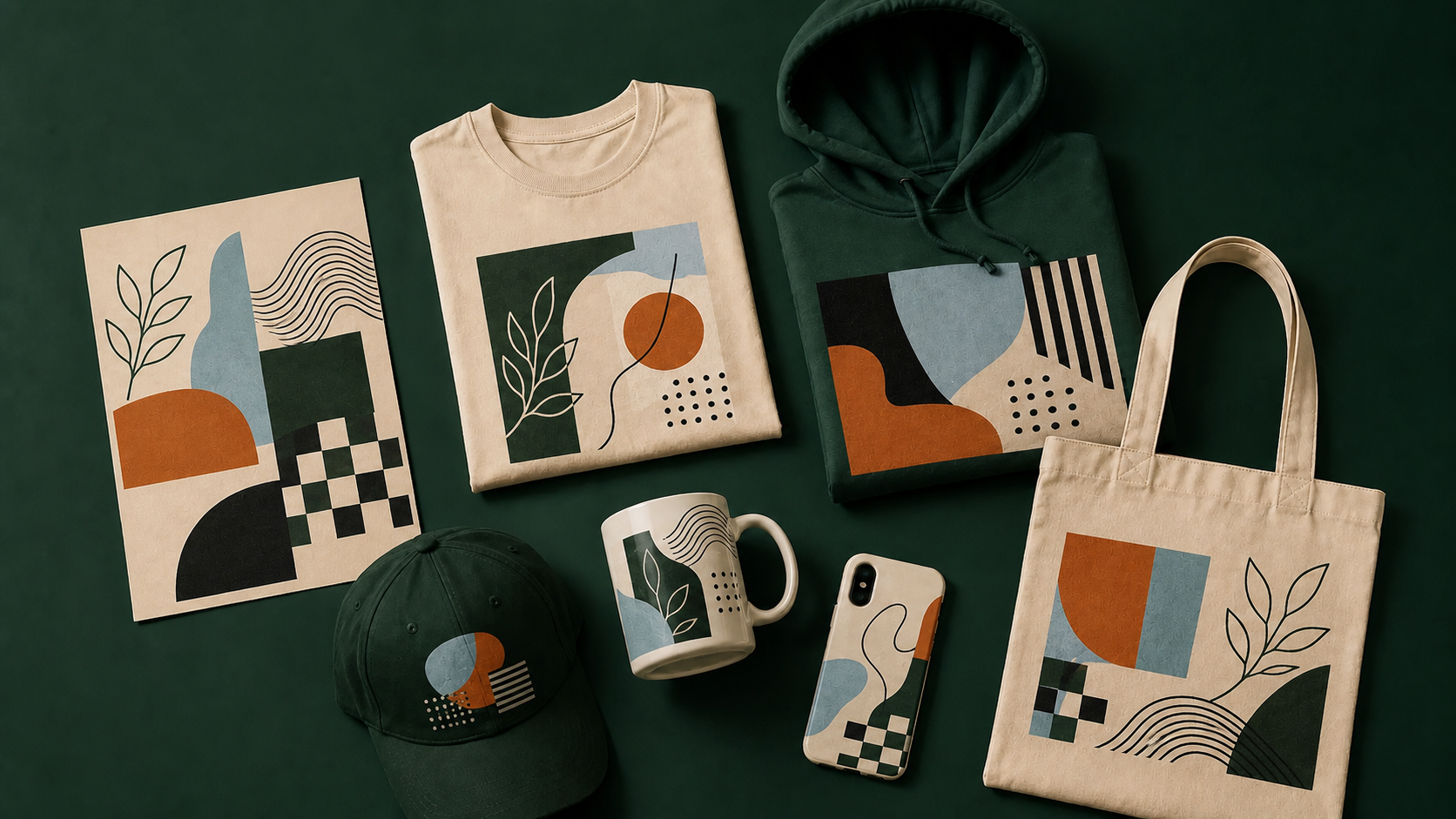
Apparel leads the category because it prints well and people buy a lot of it: t-shirts, sweatshirts, hoodies, and tote bags are the core. Beyond that, most catalogs extend into hats, mugs, posters, phone cases, and stickers. The practical rule is to sell what your partner actually prints well, on blanks they stock — a great design on the wrong garment still disappoints the customer. If t-shirts are your focus, our print-on-demand t-shirt range is the place to start.
How is a print-on-demand product actually made?
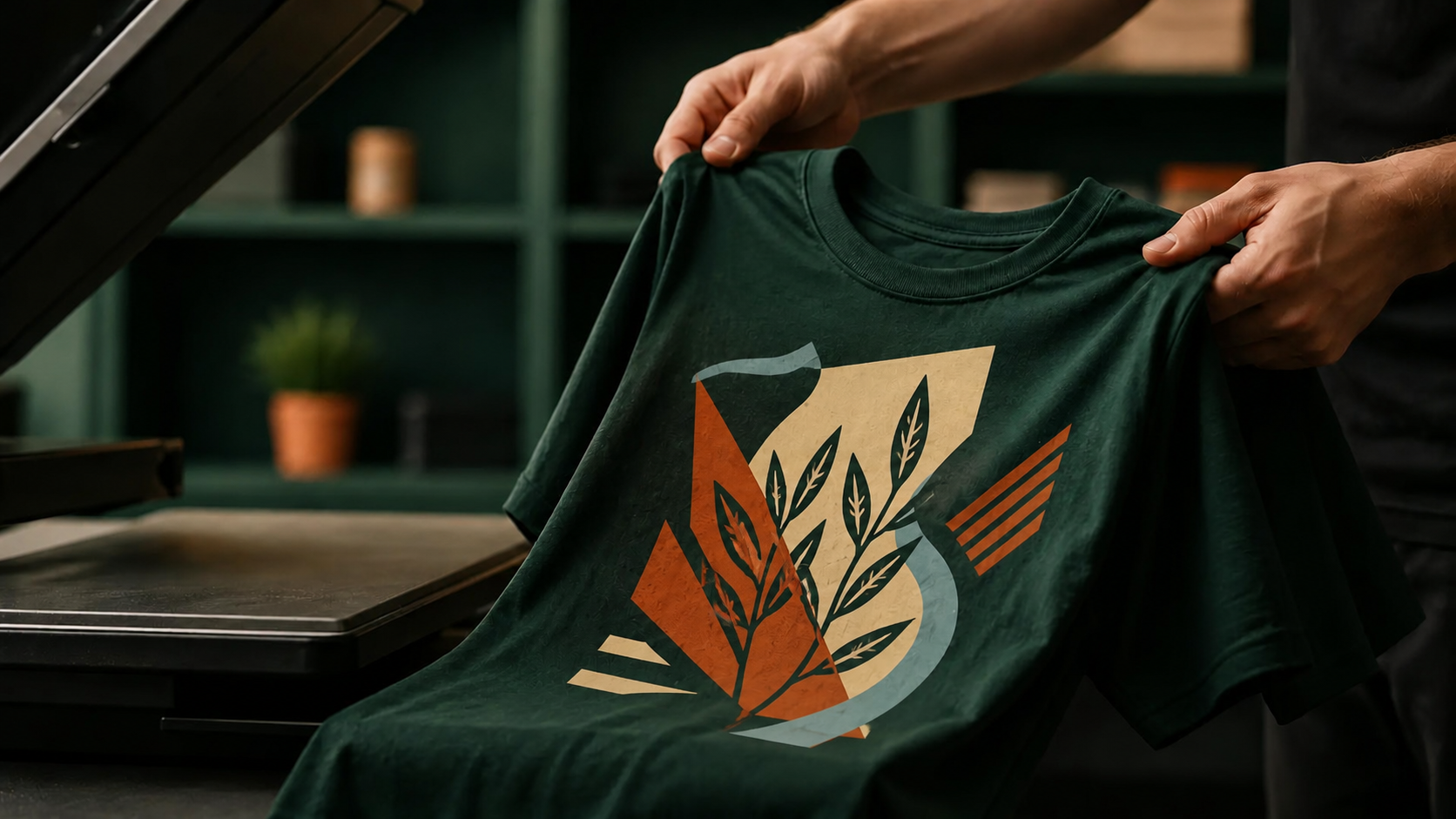
This is the part most guides skip, and it is where quality is won or lost. Printing your design on a shirt is not one process — there are several, and the right one depends on the fabric, the design, and the order size:
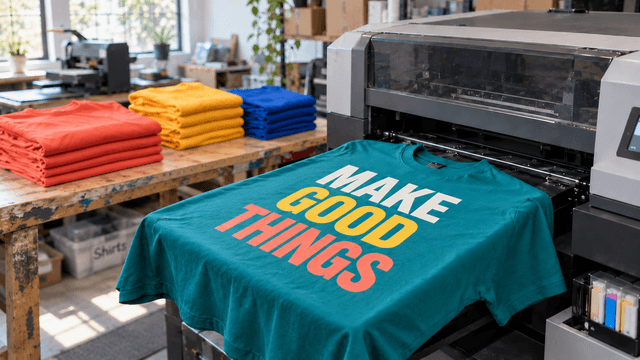
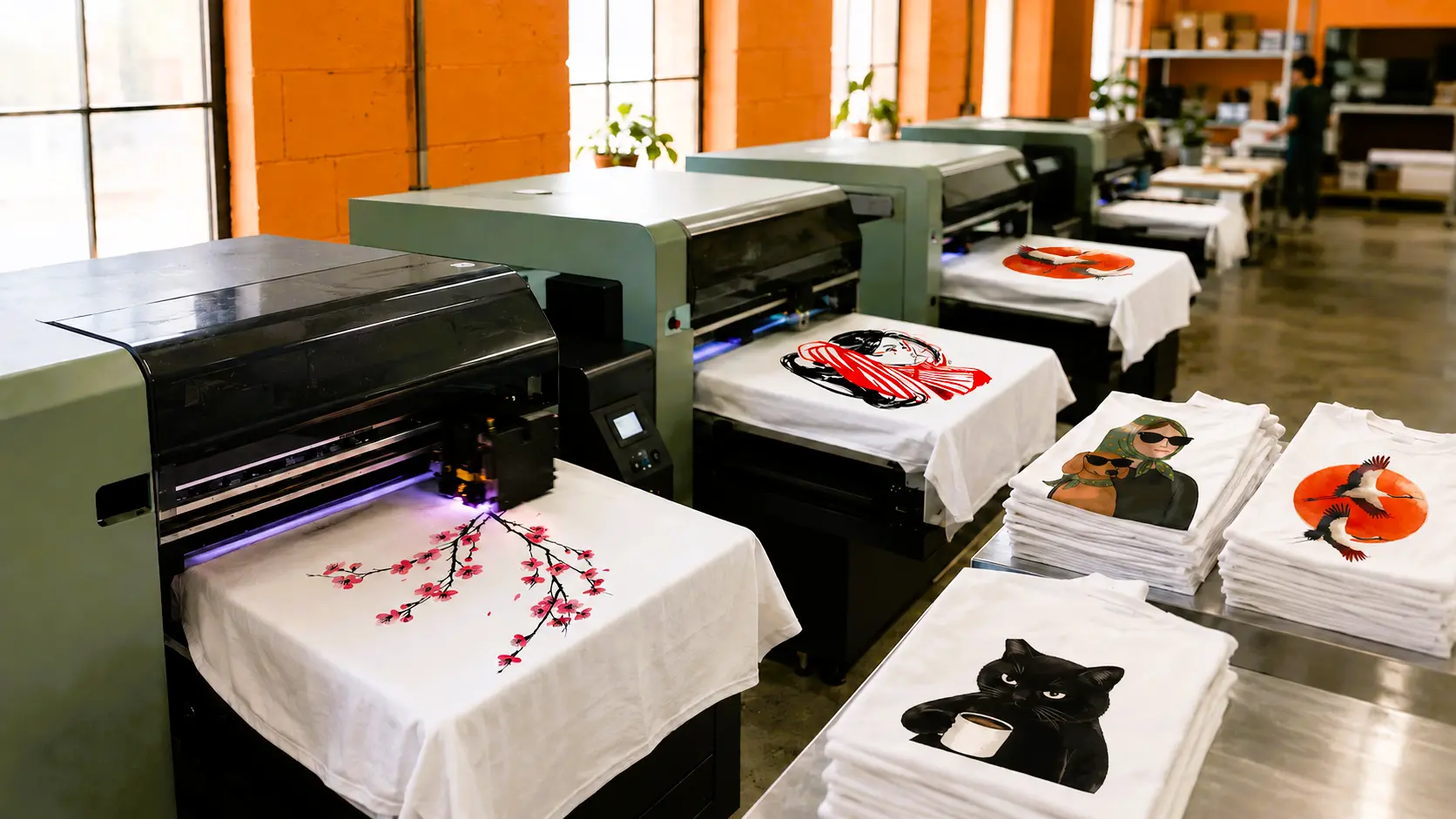
- DTG (direct-to-garment) prints water-based ink straight into cotton for a soft, detailed finish. Here is what DTG printing is.
- DTF (direct-to-film) transfers a design onto almost any fabric, including polyester and dark garments, and is extremely durable. Here is what DTF printing is.
- Screen printing is the most economical and vibrant option once you are printing the same design in real volume.
- Sublimation dyes polyester for all-over prints and hard goods like mugs.
Which method your product uses directly affects how it feels and how long it lasts, so it is worth understanding before you pick blanks. We break down the trade-offs in our full DTG vs DTF vs screen printing comparison — and a company that actually prints will match the method to the product for you.
How much does print on demand cost, and is it profitable?
The startup cost is close to nothing. There are no minimum orders and no inventory, so beyond an optional store subscription you can launch for free and only ever pay once a sale has already happened. Your cost per item is a flat per-piece price from your fulfillment partner — for a printed t-shirt, typically somewhere in the $9 to $16 range depending on the blank, the print, and where it ships from.
Profitability comes down to the gap between that cost and your retail price. A tee that costs you $12 fulfilled and sells for $27 leaves $15 before shipping and fees. The margin per item is thinner than bulk production, so the discipline is in pricing, not volume — which is exactly why we wrote a full guide on pricing POD products for real margin. Done right, print on demand is genuinely profitable; the sellers who struggle almost always underprice, not underprint.
Print on demand vs dropshipping — what is the difference?
They are cousins, and people mix them up. Both mean you sell without holding stock and the product ships directly to the customer. The difference is what you are selling: dropshipping resells an existing, generic product from a supplier's catalog, while print on demand creates a custom product with your own design on it. Print on demand is dropshipping's made-to-order, branded sibling — you are selling something that did not exist until the order came in, which is what lets you build an actual brand rather than reselling the same item as everyone else.
Who is print on demand best for?
It fits when:
- You are a creator, artist, or influencer turning an audience into merch without upfront risk.
- You are a new brand testing designs — list ten, keep the two that sell, drop the rest, all at no cost.
- You are an established store adding merchandise or a long tail of designs alongside your main line.
It is the wrong tool when:
- You are selling one proven design in the thousands — bulk screen printing will beat POD on unit cost.
- You compete purely on being the cheapest — the per-item model leaves less room at rock-bottom prices.
For most people, though, especially anyone starting out or running many designs, print on demand removes the exact risk that kills new brands: money spent on stock that never sells.
Frequently asked questions
What does POD stand for?
POD stands for print on demand — a model where each product is printed and shipped only after a customer orders it, so you hold no inventory.
Do you need inventory for print on demand?
No. Nothing is produced until a sale happens, which is the entire point: no stock, no warehouse, and no money tied up in products that might not sell.
How much does it cost to start print on demand?
Close to nothing. There are no minimum orders or inventory costs; beyond an optional store subscription, you only pay your per-item fulfillment cost after a customer has already paid you.
Is print on demand profitable in 2026?
Yes, when priced properly. Margins per item are thinner than bulk production, so profitability depends on setting retail prices that cover your per-item cost, shipping, and fees — not on printing in volume.
What is the difference between print on demand and dropshipping?
Dropshipping resells a supplier's existing generic product; print on demand creates a custom product with your own design, made to order. POD is the branded, made-to-order version.
What is a print-on-demand store?
A print-on-demand store is an online shop — on Shopify, Etsy, or your own site — where the listed products are printed and shipped by a fulfillment partner only after each order, so the owner never handles stock.
The bottom line
Print on demand turned starting a product brand from a gamble on inventory into something you can launch in an afternoon with no money on the line: you design, a partner prints and ships, and you only ever pay for what has already sold. The catch is that the quality your customer receives depends entirely on how well your partner prints — the method, the blank, and the care behind each order. If you are deciding what to sell or which print method fits your design, talk to us before you list it. We print and ship these orders every day, and we would rather help you get it right up front than watch it come back as a return.
Related guides
Switch to Pengine.
We offer a fully managed migration service at no extra cost, including product transfer and setup support.