Print-on-Demand T-Shirt Fulfillment: How It Works, Costs, and How to Choose a Partner
T-shirt fulfillment is everything that happens after a customer clicks buy: the order reaches a production partner, the shirt is printed, checked, packed, shipped, and tracked. With print on demand, the process starts only after the sale, so you can sell custom shirts without buying inventory or running a packing station yourself.
The model looks simple from the storefront, but the partner behind it affects your margins, delivery experience, and reputation. This guide explains how print-on-demand T-shirt fulfillment works, what you pay for, and how to choose a provider that can support your brand as orders grow.
T-Shirt Fulfillment Explained: The Short Version
- You create the product, set the retail price, and sell it through your online store.
- A fulfillment partner receives each paid order and produces the shirt on demand.
- The partner handles printing, quality control, packing, shipping, and tracking.
- You pay a per-order cost instead of purchasing a bulk run or storing stock.
- Your profit is the retail price minus production, shipping, platform fees, and marketing costs.
What Is T-Shirt Fulfillment?
T-shirt fulfillment combines production and logistics. In a traditional operation, a brand orders shirts in bulk, stores every size and color, picks items from shelves, packs them, buys labels, and arranges carrier pickups. A print-on-demand partner replaces that inventory and warehouse work with an order-by-order service.
For a seller, the result is a print-on-demand T-shirt that does not physically exist until a customer orders it. The blank garment, artwork file, print method, shipping address, and customer details come together only when the order enters production.
That makes fulfillment different from printing alone. A printer may hand you a finished bulk order. A fulfillment partner has to receive individual orders reliably, choose the correct variant, produce one item, package it appropriately, send tracking back to the store, and repeat the process without mixing up customers.
How Print-on-Demand T-Shirt Fulfillment Works
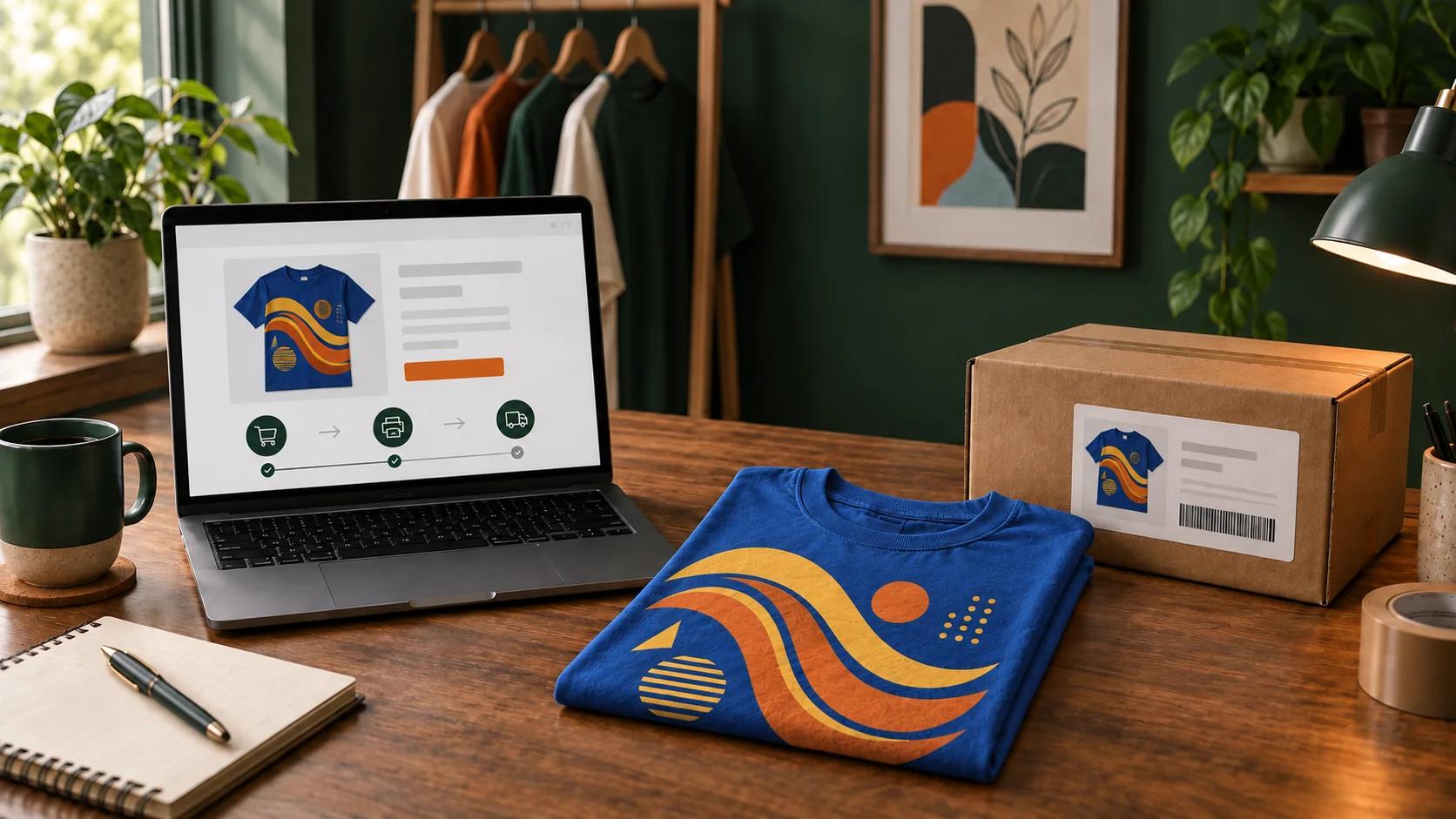
- 1. You create and publish the product. Choose a blank shirt, upload the artwork, select colors and sizes, build mockups, and set the price. The product data then moves to your connected storefront.
- 2. The customer places an order. Your store collects payment and sends the order details to the fulfillment platform. The most important fields are the product, design, size, color, quantity, shipping address, and selected delivery method.
- 3. The order is prepared for production. The system matches the sale to the correct blank and print file. A reliable workflow catches missing artwork, unavailable variants, and address problems before production begins.
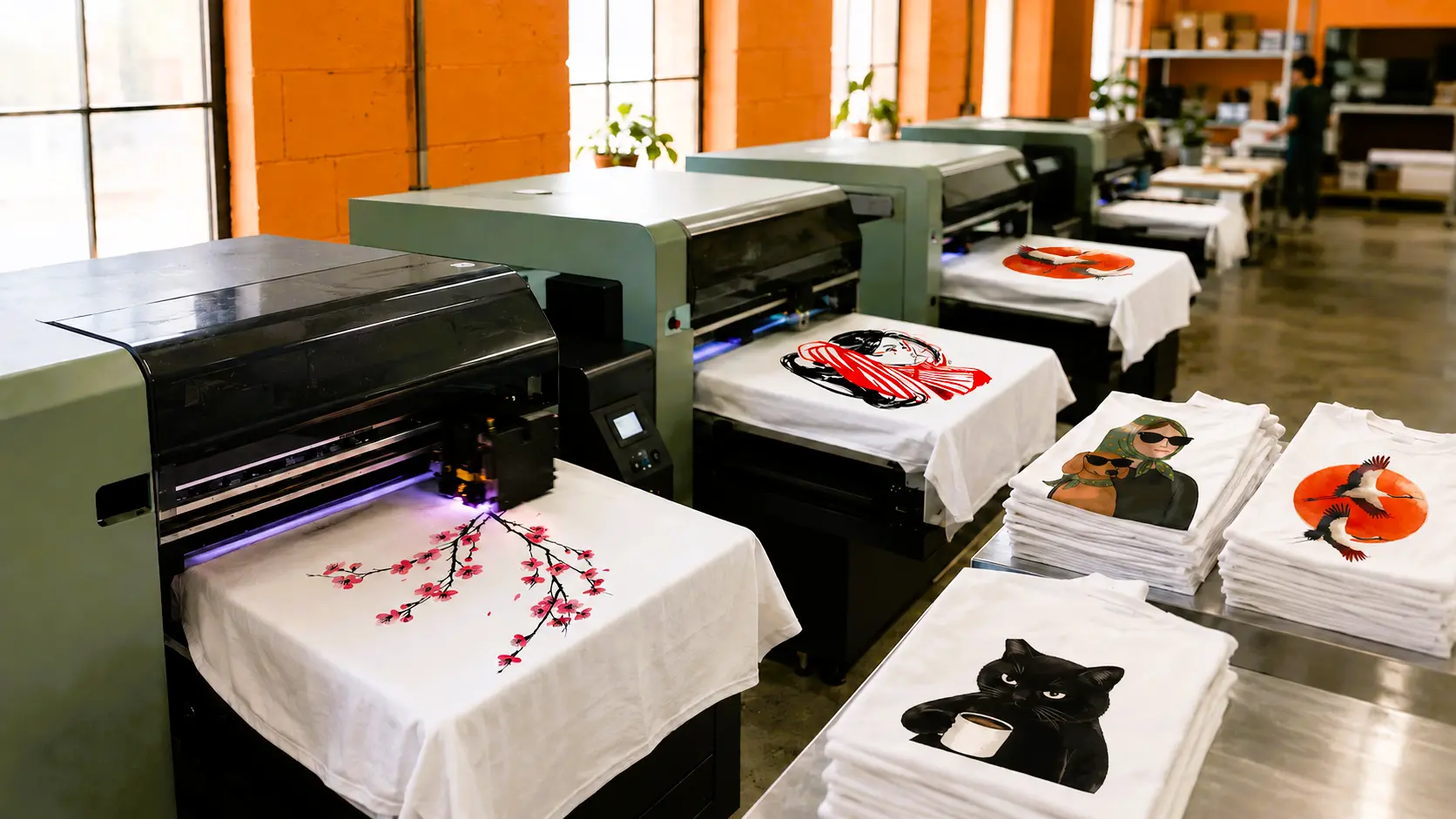
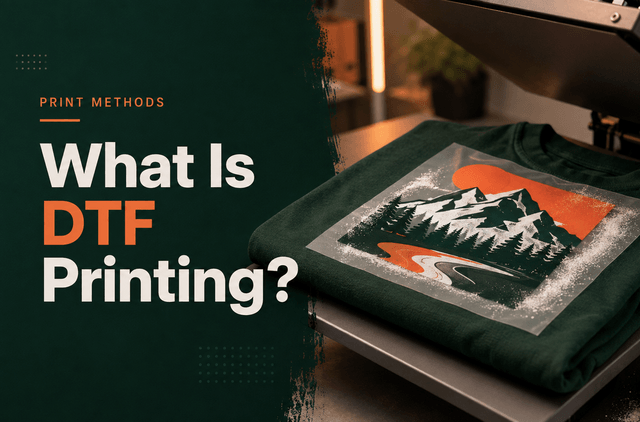
- 4. The shirt is printed. Cotton-rich garments and detailed artwork often use DTG, while DTF can suit a wider range of fabrics and bold graphics. The right method depends on the garment, artwork, and desired feel; our DTG vs DTF vs screen printing comparison explains the trade-offs.
- 5. The finished item is checked and packed. The team confirms the correct garment and print, checks for visible defects, folds the shirt, adds any supported branding, and places it in suitable packaging.
- 6. The parcel ships and tracking returns to the store. The carrier takes over the final delivery. In a connected setup, the order status and tracking number flow back to the storefront so the customer can follow the shipment.
What Does T-Shirt Fulfillment Cost?
There is no useful single price for every shirt because the total changes with the blank, print method, print area, destination, packaging, and shipping speed. The practical way to evaluate cost is to separate the stack into four parts: the blank garment, printing, packing or branding extras, and shipping.
A standard printed POD tee often falls around $9 to $16 before shipping, depending on the blank and print. Treat that as a planning range rather than a quote. Premium garments, multiple print locations, oversized artwork, sleeve prints, or specialty packaging raise the cost.
Your retail price also has to cover payment fees, storefront fees, discounts, returns, and customer acquisition. A shirt that appears profitable on production cost alone can lose money after those expenses. Use the full calculation in our POD pricing guide before deciding what margin a product really earns.
Turnaround Time and Shipping Are Different
Production time is the period between order acceptance and the parcel being handed to a carrier. Shipping time begins after that handoff. Customers experience the two as one wait, so your delivery promise needs to include both.
Ask a provider for its normal production target, peak-season target, order cutoff rules, carrier options, and policy for delayed or lost parcels. Averages are useful, but exception handling matters more. The partner should make it obvious when an order is waiting for an address fix, an unavailable blank, or a reprint.
Quality Control Is Part of Fulfillment
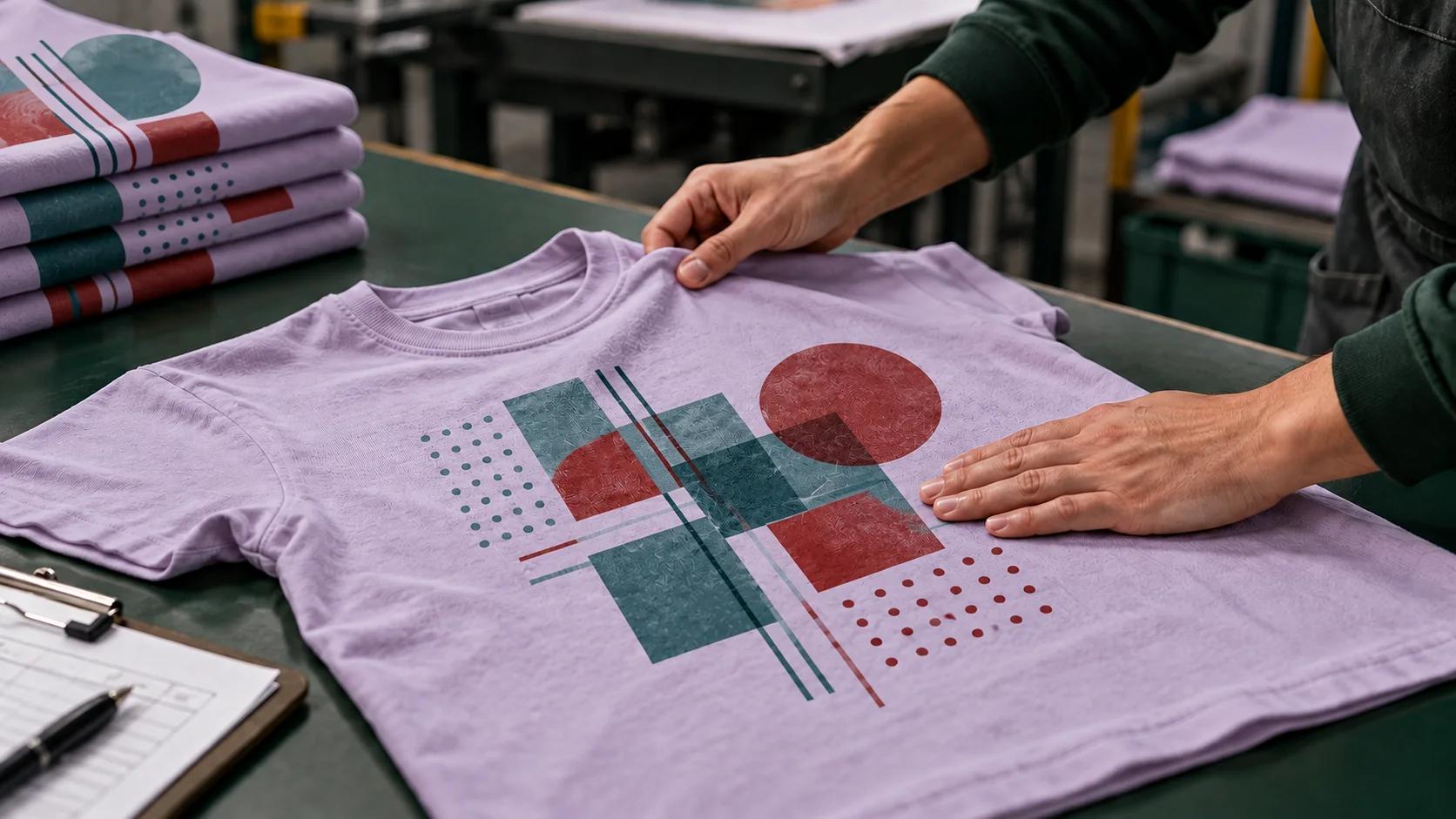
A good mockup wins the sale; the physical shirt determines whether the customer comes back. Quality control should confirm the correct garment, size, color, print file, placement, and visible finish before the order is packed.
Watch for crooked placement, ink or transfer defects, marks from pretreatment, damaged seams, incorrect variants, and packaging that exposes the product to moisture. Also ask how the provider handles a confirmed production error. Clear reprint rules protect both the seller and the customer.
Store Automation Removes Manual Order Work
A connected fulfillment workflow should move products and orders without repeated data entry. With a Shopify print-on-demand integration, product details and variants can sync to the store, paid orders can enter fulfillment automatically, and shipment updates can return to the customer order.
Automation is valuable because manual copying creates quiet mistakes: the wrong size, a misspelled address, an old artwork file, or a tracking number that never reaches the customer. Before choosing a partner, confirm what syncs automatically, what still needs approval, and how failed orders are flagged.
How to Choose a T-Shirt Fulfillment Partner
- Start with product and print quality. Order samples using the same blanks and artwork styles you plan to sell. Wash them, compare color and placement, and inspect the packaging as if you were the customer.
- Check the catalog depth that matters to your brand. A large catalog is not automatically better; dependable stock in the fits, fabrics, colors, and sizes you actually sell is more valuable.
- Review the full cost, not only the advertised shirt price. Include additional print areas, packaging, shipping, platform fees, and any subscription or setup charge.
- Test the integration. Create a product, place a sample order, change an address, and follow the tracking update. The workflow should be understandable before real customers depend on it.
- Read the replacement and support policies. You need a clear path for production defects, damaged parcels, lost shipments, unavailable products, and orders that customers want to change.
- Consider how the partner handles growth. Ask about seasonal capacity, bulk product creation, multiple stores, order visibility, and whether the same process still works when a launch produces a sudden spike.
Packing Is the Final Brand Touchpoint
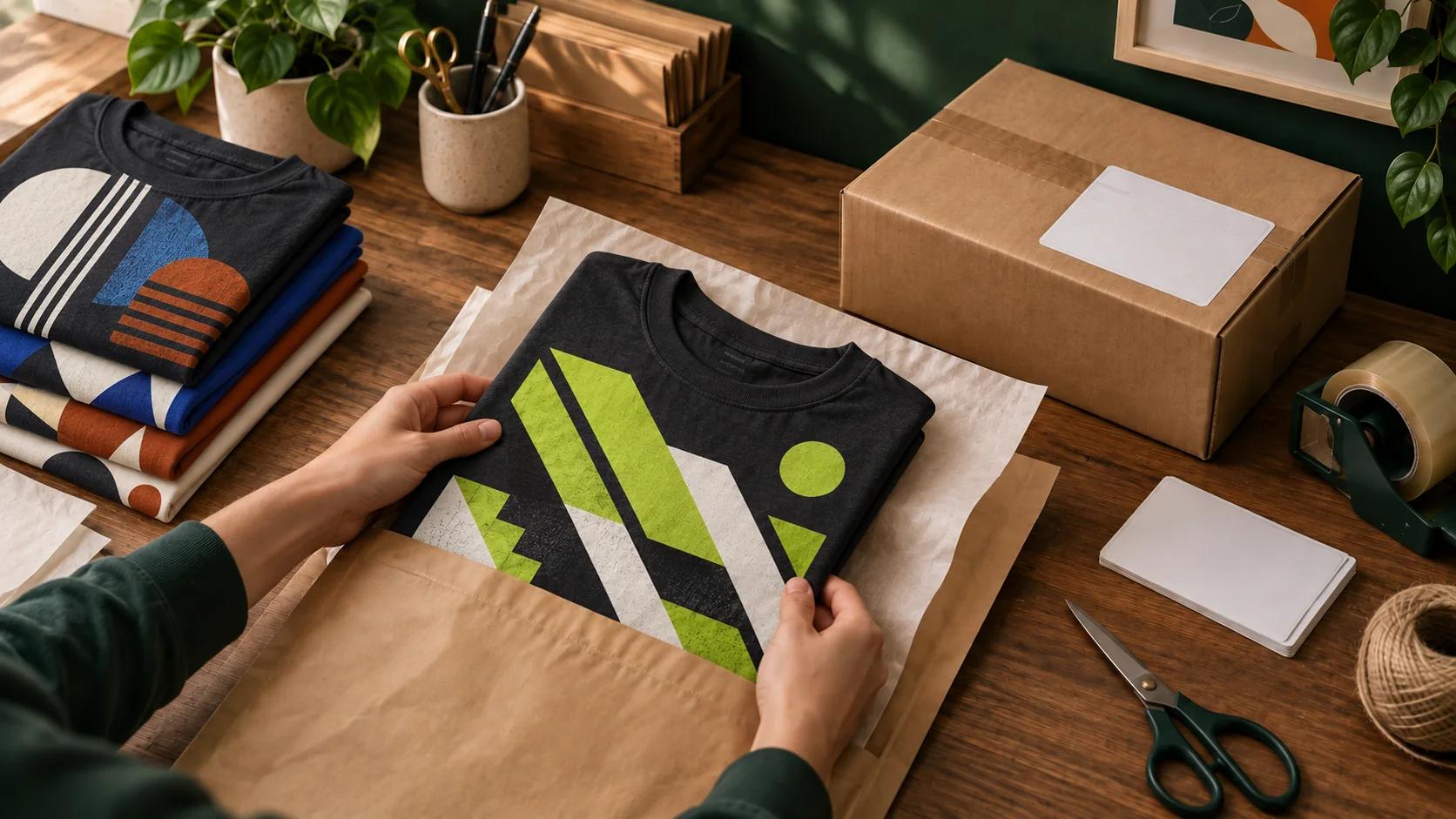
Customers do not see the production dashboard. They see the parcel, the fold, the garment, and the print. Clean packaging, an accurate label, and a product that arrives undamaged make fulfillment feel invisible—which is exactly what you want.
If branded packing slips, neck labels, inserts, or custom packaging matter to your business, verify what the provider supports and what each option costs. Use extras to reinforce a real brand experience, not to hide weak product quality.
Frequently Asked Questions
What does a T-shirt fulfillment company do?
It receives customer orders, produces the correct shirt, checks it, packs it, ships it, and provides order or tracking updates. Print-on-demand providers also let sellers operate without holding inventory.
Do I need to buy T-shirts in advance?
Not with print-on-demand fulfillment. The provider produces each shirt after it sells, so you can test designs and offer multiple sizes without purchasing stock upfront.
Can T-shirt fulfillment connect to Shopify?
Yes. A supported integration can sync products and variants, send customer orders into production, and return fulfillment or tracking updates to Shopify.
Is print-on-demand fulfillment better than shipping orders myself?
It is usually better when you want to avoid inventory, test many designs, or spend your time on product and marketing. Self-fulfillment can offer more control and lower unit costs after demand is predictable and order volume justifies inventory and warehouse work.
The Bottom Line
T-shirt fulfillment should turn a sale into a correctly printed, carefully packed, trackable delivery without forcing you to manage stock or production. The best partner is not simply the one with the lowest base price; it is the one whose product quality, integration, communication, and exception handling protect the experience your customer paid for. If you want to build that workflow without carrying inventory, explore Pengine’s print-on-demand T-shirt fulfillment and test the process with your own product.

Switch to Pengine.
We offer a fully managed migration service at no extra cost, including product transfer and setup support.