What Is DTG Printing? How It Works, What It Costs, and When to Use It in 2026
DTG stands for direct-to-garment printing, a method that uses a specialized inkjet printer to apply water-based ink directly onto a finished garment. It is best suited to detailed, full-color designs on cotton, works without minimum orders, and produces a soft print that becomes part of the fabric. This guide explains how DTG works, how long it takes, what it costs, and when DTF or screen printing is the better choice.
DTG Printing Explained: The Short Version
- DTG means direct-to-garment: water-based inks printed directly into the fabric, closer to a photo printer than a traditional press.
- It is at its best on 100% cotton, reproduces photographic detail and unlimited colors, and has no setup cost, so a single shirt is as economical to print as the fiftieth.
- Printing a dark garment typically consumes around $2 to $4 in ink and pretreatment; through a print-on-demand partner, a finished tee usually lands between $9 and $16 before shipping.
- A properly cured DTG print survives 50 or more washes, softening gradually into the fabric rather than cracking off it.
- It is the wrong tool for polyester, performance wear, and large runs of a single design. DTF and screen printing take over there.
| DTG at a glance | |
|---|---|
| What it is | Inkjet printing directly onto fabric with water-based pigment inks |
| Best fabric | 100% ringspun cotton; blends of 80% cotton or more are workable |
| Dark garments | Yes, with pretreatment and a white ink underbase |
| Color and detail | Unlimited colors, gradients and photographs at up to 1,200 dpi |
| Feel | Softest of any method; the ink sits in the fibers, not on top |
| Durability | 50+ washes when properly cured, fading gradually rather than cracking |
| Setup cost | None. No screens, no films, no minimums |
| Turnaround per shirt | Roughly 1 to 4 minutes of print time, plus pretreatment and curing |
| Weak spots | Polyester, bulk runs, neon and metallic colors |
What is DTG printing?
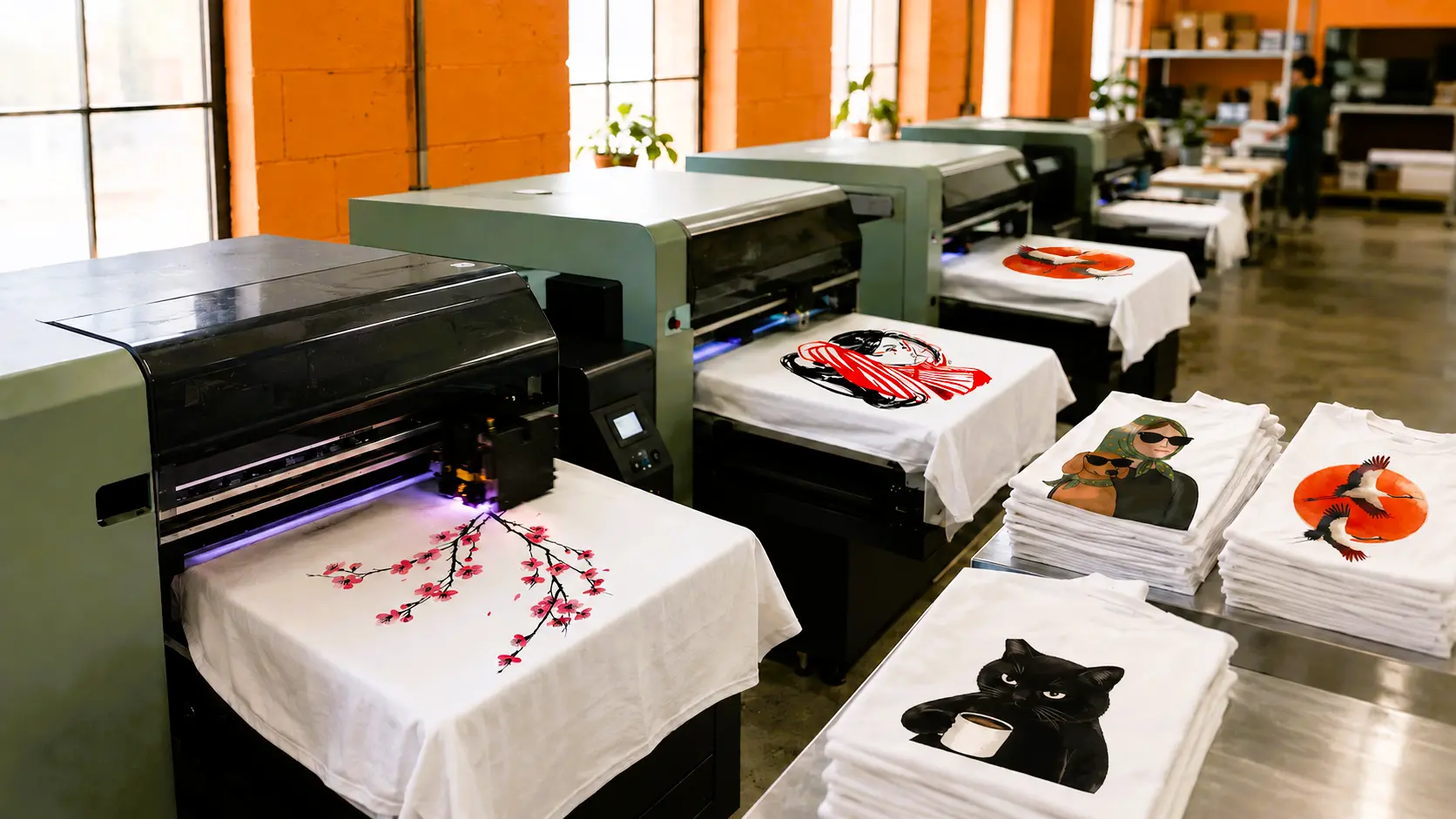
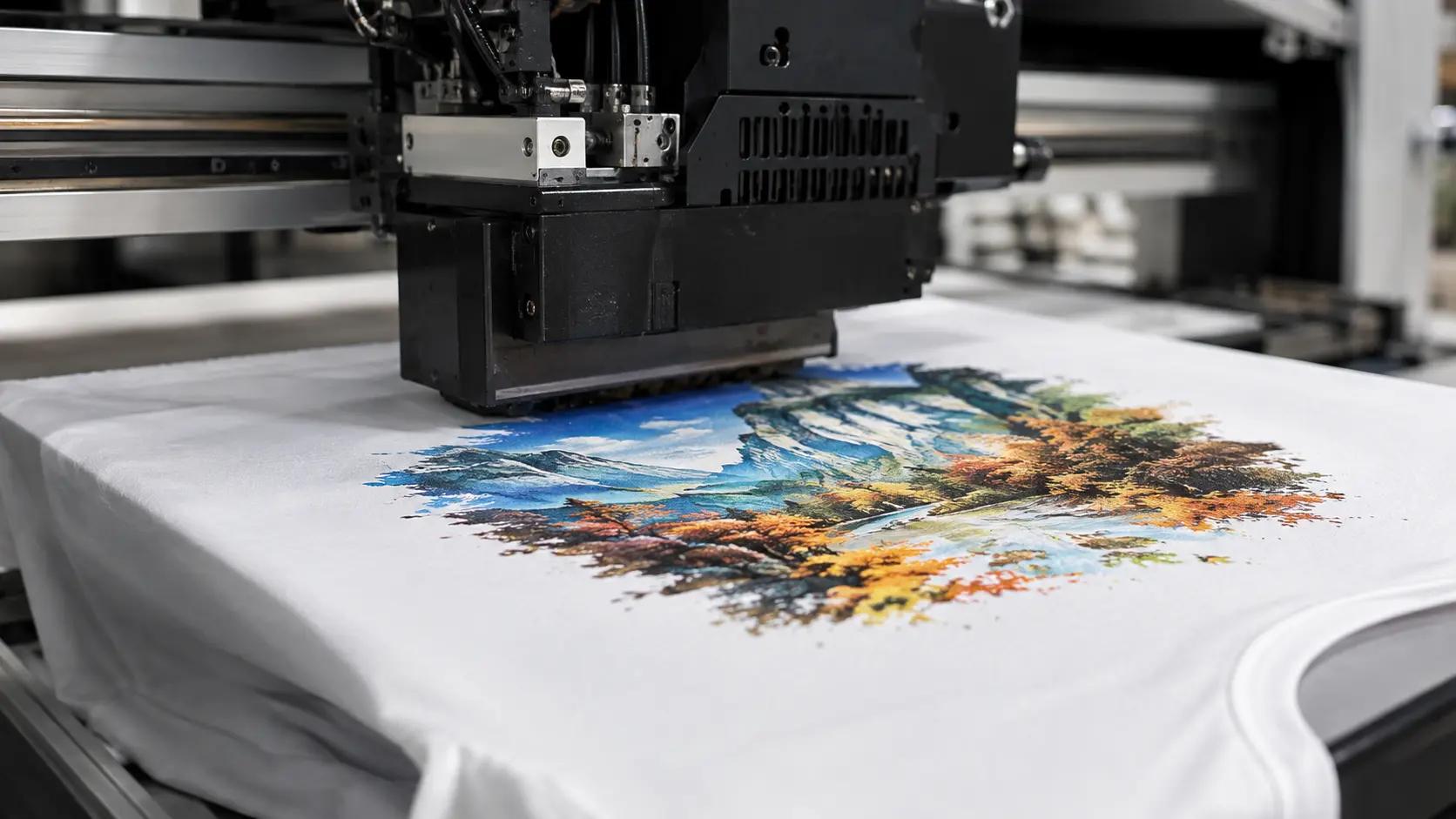
DTG printing, short for direct-to-garment printing, is a method where a printer applies water-based ink directly onto a finished garment, one drop at a time, the same way a desktop inkjet applies ink to paper. There is no screen, no transfer sheet, and no vinyl in between. The design goes from a digital file straight into the fabric.
That one difference explains almost everything else about the method. Because there is nothing to set up per design, DTG has no minimum order quantity. Because the printer works in CMYK plus white, it can reproduce gradients, photographs, and designs with hundreds of colors at no extra cost. And because the ink soaks into the fibers instead of forming a layer on top, the print is nearly weightless on the shirt.
The first commercial DTG printers appeared around 2005, but the method really took off with the rise of print on demand, and it is easy to see why the two fit together. A business model built on selling one shirt at a time needs a print method with no setup cost, and that is exactly what DTG is. Today it is the default method most fulfillment providers, ours included, reach for when a design lands on a cotton garment.
How does DTG printing work?
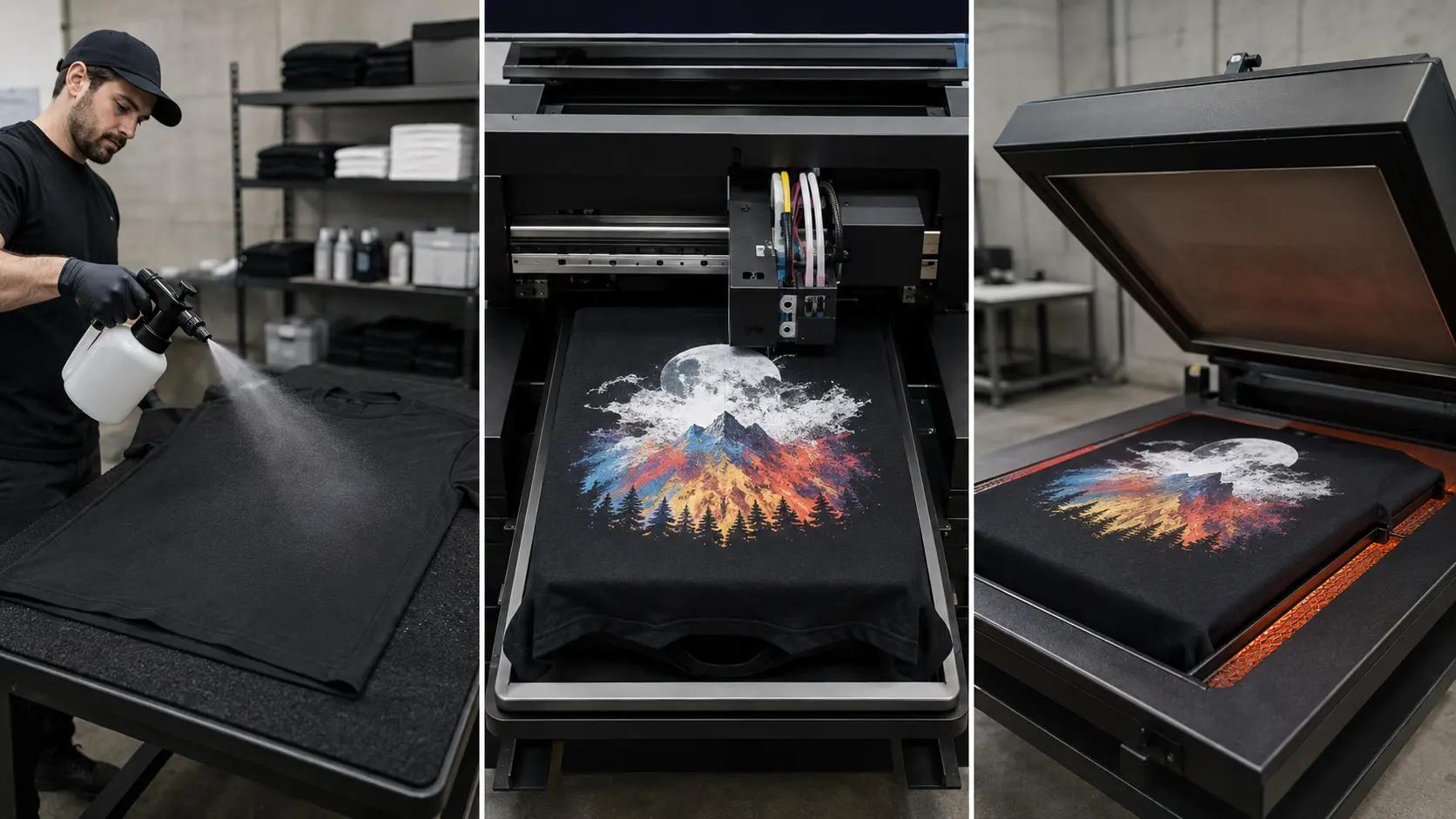
From order to finished shirt, a DTG print passes through four stages. Each one affects the quality of what your customer unboxes, which is why it is worth knowing what happens even if you never touch a printer yourself.
1. File preparation. The design file is checked for resolution and sizing, ideally 300 dpi at the printed dimensions, with a transparent background. Software then builds the print file, including the white underbase layer if the garment is dark.
2. Pretreatment. The garment is sprayed with a clear pretreatment liquid and heat-dried. On dark garments this step is not optional: pretreatment is the primer that lets white ink sit on the surface instead of vanishing into the fabric. Uneven pretreatment is behind two of the most common DTG complaints, faint rectangular marks around the print area and colors that wash out early.
3. Printing. The garment is loaded flat onto a platen and the print head passes over it, laying down white first on dark garments, then color on top, at resolutions up to 1,200 dpi. A light shirt with a small chest print takes about a minute; a dark shirt with a large, ink-heavy design can take three to four minutes.
4. Curing. The printed shirt goes under a heat press or through a conveyor dryer at roughly 320°F (160°C) for one to three minutes. Curing bonds the pigment to the fibers, and it is the single biggest factor in how long the print lasts. A print that cracks or peels after a few washes was almost always under-cured, not badly printed.
What does DTG printing cost?
For a seller, the most important number is the one on your fulfillment invoice, but it helps to know what sits behind it. In ink and pretreatment alone, a light-colored shirt consumes roughly $0.50 to $1.50 per print. A dark shirt runs closer to $2 to $4, because the white underbase uses more ink than the design itself, and white DTG ink is the most expensive ink in the building. Add the blank garment, labor and machine time, and you can see why dark garments usually price a dollar or two higher than light ones.
Through a print-on-demand partner, all of that is rolled into one flat price per piece, typically $9 to $16 for a printed tee depending on the blank, the print size, and where it ships from. There are no setup fees and no minimums, which is the whole appeal: your first sale is profitable on its own, and you never buy inventory that might not sell.
The margin math stays simple as a result. A shirt that costs you $12 fulfilled and sells for $27 leaves $15 before shipping and fees. Where sellers get into trouble is not the print cost but the pricing around it, and if that is the stage you are at, our guide on pricing POD products for real margin is the better read.
Is DTG printing good quality?
Yes, with two conditions: the garment has to suit the method, and the print has to be cured correctly. When both are true, DTG produces the most detailed, softest-feeling print available, and it holds up through 50 or more washes, fading slowly and evenly the way the shirt itself does.
Because we would rather you hear it from a printer than from a customer review, here is what DTG quality problems actually look like and where they come from:
- Cracking or peeling after a few washes. Under-curing. The pigment never fully bonded. This is a process failure, and a reputable provider will reprint it.
- A faint box or stain around the design. Pretreatment residue, either applied too heavily or not fully dried. It usually disappears after the first wash; if it does not, that is a reprint too.
- Colors duller than the mockup. Often the fabric, not the printer. Prints on 50/50 blends or carded open-end cotton come out visibly more muted than on combed ringspun cotton. Screens also display colors brighter than any ink can print them.
- Heavy fading after the first wash. Usually loose surface fibers taking ink with them, a fabric behavior called fibrillation that shows up on cheaper blanks. The fix is a better blank, not a different method.
One more expectation worth setting: DTG prints in CMYK, so it cannot produce true neon or metallic colors, and very bright reds and oranges lose a little saturation. If your brand lives on those colors, screen printing with mixed inks does them better.
What fabrics work best for DTG?
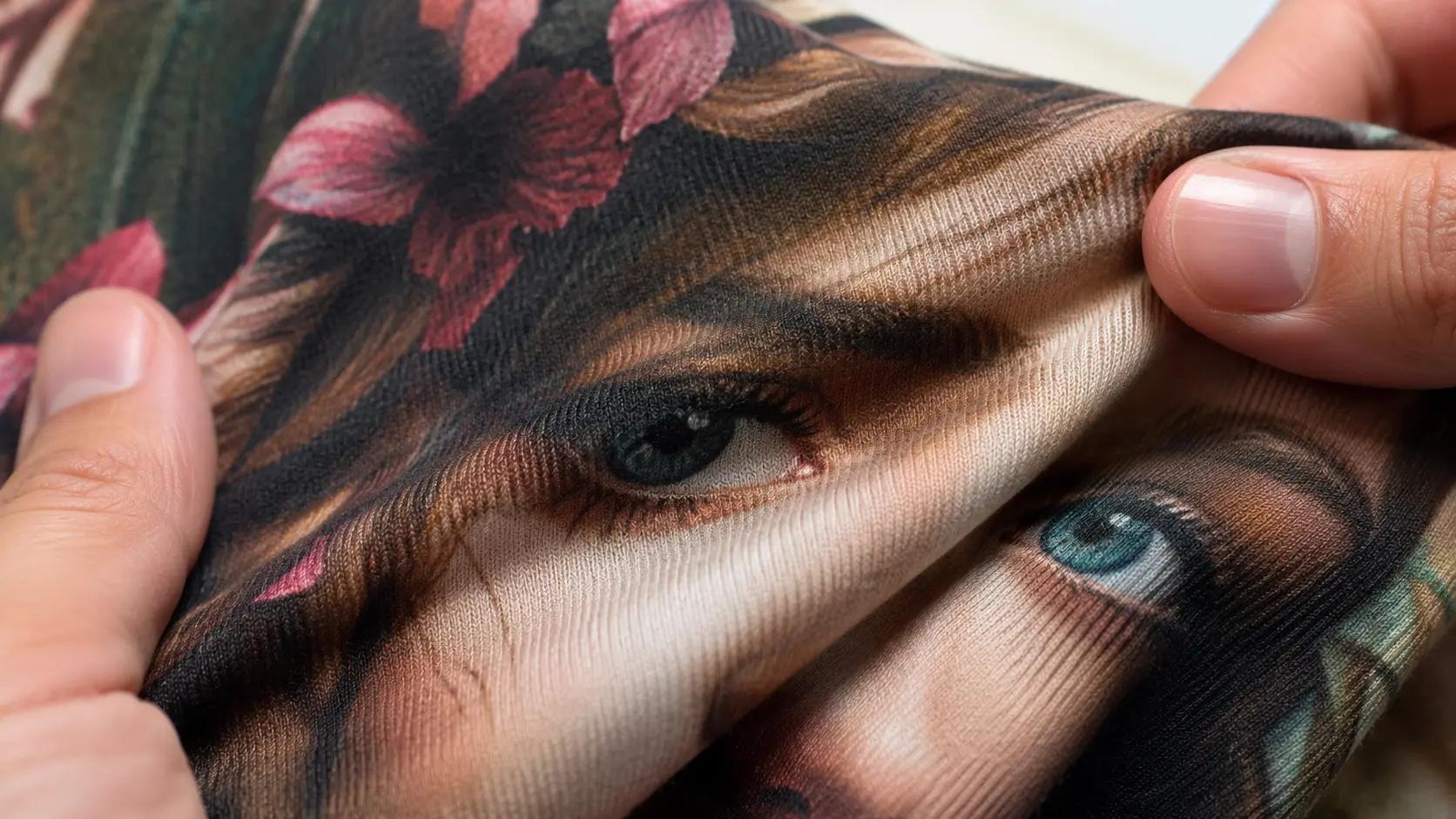
Water-based pigment ink bonds to natural fibers, so the rule is simple: the more cotton, the better the print. 100% combed ringspun cotton is the gold standard, which is why premium blanks like the Bella+Canvas 3001 are the default canvas for DTG across the industry. Standard carded cotton like a Gildan 5000 prints fine, just slightly less crisp, because the yarn surface is rougher.
Blends follow a sliding scale. At 80% cotton or above you will barely notice a difference. At 50/50 the print comes out noticeably softer in color, which can suit a vintage look but disappoints customers expecting the mockup. Below that, and on 100% polyester or performance fabrics, DTG is the wrong choice entirely: the ink cannot grip the fibers and the pretreatment can leave permanent marks on heat-sensitive material. For those garments, DTF is the method you want, and we compared the two in detail in our guide to DTG vs DTF vs screen printing.
When should you use DTG, and when should you not?
Reach for DTG when your product and design look like this:
- Cotton or cotton-dominant garments: tees, sweatshirts, hoodies, tote bags.
- Designs with photographic detail, gradients, or many colors.
- Print-on-demand economics: one-off orders, large catalogs, untested designs.
- A customer base that cares how a shirt feels, not just how it looks.
Look elsewhere when the job looks like this:
- Polyester, nylon, or performance wear: use DTF or sublimation.
- Hats, shoes, and seams or zippers the platen cannot hold flat: DTF transfers handle those shapes.
- One design in real quantity, roughly 50 pieces or more: screen printing wins on unit cost.
- Neon, metallic, or exact brand-color matching: screen printing with mixed inks.
If you are unsure which side of that line a product falls on, ask your fulfillment partner before you publish the listing. It is a two-minute question that prevents a month of quality complaints, and any provider that actually runs its own presses will have an opinion.
Frequently asked questions
What does DTG stand for?
Direct-to-garment. The name describes the process: ink is printed directly onto the garment, with no screen, film, or transfer in between.
How long does a DTG print last?
A properly cured print on good cotton survives 50 or more washes, fading gradually rather than cracking. Washing cold, inside out, and skipping the dryer extends that considerably.
Is DTG better than screen printing?
Neither is better; they solve different jobs. DTG wins on detail, color count, and orders of one. Screen printing wins on unit cost and color punch once you pass roughly 50 pieces of a single design.
Does DTG work on polyester?
Not well. Water-based DTG ink needs natural fibers to bond to. For polyester and blends below about 50% cotton, DTF printing or sublimation will give you a far more durable result.
Is DTG printing eco-friendly?
More than most alternatives. DTG uses water-based inks rather than plastisol, produces no screen-cleaning chemical waste, and in a print-on-demand model every item is made after it sells, so nothing is printed to sit unsold in a warehouse.
How long does DTG printing take?
The printing pass itself usually takes about one to four minutes per shirt. Pretreatment and heat curing add several more minutes, while the full fulfillment turnaround also includes artwork checks, production queues, quality control, packing, and shipping.
The bottom line
DTG is the method that made print on demand possible: no setup, no minimums, full color, and a print your customer can barely feel. Keep it on cotton, insist on a proper cure, and it will quietly do its job for order after order. And if you are looking at a specific design and are still not sure whether it belongs on DTG, DTF, or something else, send it to us. We print all of them every day, and we would rather tell you the right answer before you list the product than reprint it after.
Related guides
Switch to Pengine.
We offer a fully managed migration service at no extra cost, including product transfer and setup support.